

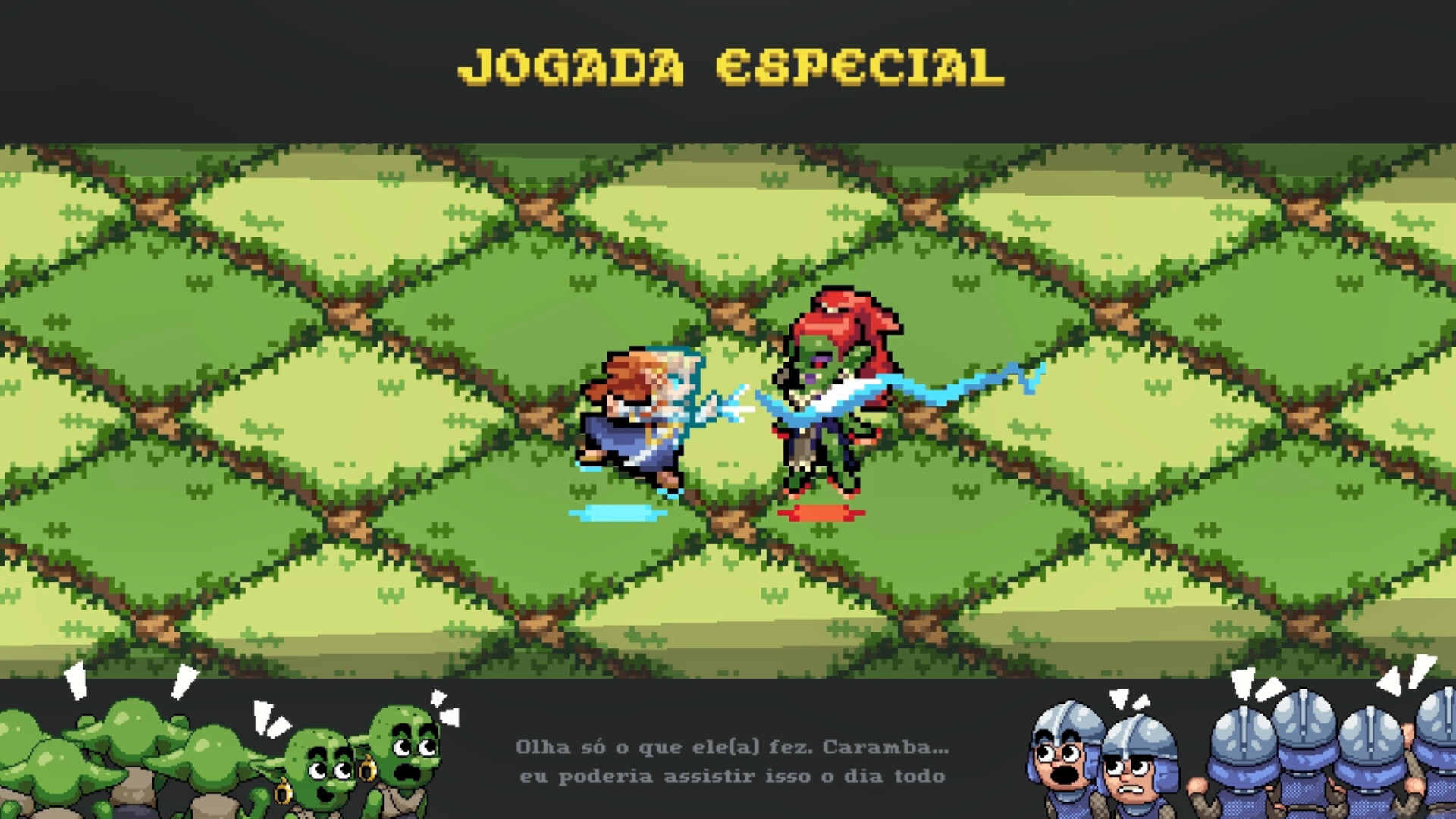
Chess of Mana is a strategy game that takes the familiar framework of chess and rebuilds it around a single resource: Mana. Developed by Monk Monkey, this is a fantasy chess variant where two factions — Celts and Orcs — face off on a board that functions less like a quiet parlour and more like a magical battlefield. The central twist is straightforward but far-reaching: capturing a piece doesn't remove it from play permanently. Through Mana, fallen pieces can be revived and returned to the board, fundamentally altering how every exchange plays out.
The revival mechanic reshapes the entire strategic landscape. In traditional chess, trading pieces carries permanent consequences — sacrificing a knight or losing a bishop narrows your options for the rest of the game. Chess of Mana dismantles that permanence. Because captured units can return to the fight, bold aggressive play carries less risk and defensive calculations shift accordingly. Even experienced chess players will find themselves rethinking familiar patterns when the pieces they've taken can reappear on the opposing side of the board.
The King sits at the centre of this system, serving not just as the piece you must protect but as the source of all Mana power. This dual role gives the King a significance beyond traditional chess. Protecting your King isn't only about avoiding checkmate — it's about preserving your ability to fuel revivals and sustain your army. Every decision on the board feeds back into this resource economy, creating a layer of tactical consideration that standard chess doesn't have.
For those who prefer the original game untouched, Chess of Mana includes a Classic Chess mode. Standard rules apply, though the presentation remains the same vibrant pixel art style that defines the rest of the experience. It's a clean alternative for players who want the visual flair without the Mana mechanics.
The visual identity is one of the game's most distinctive qualities. Chess of Mana renders its board and pieces in detailed pixel art, with characters that sprint across tiles and clash during every capture. Rather than the sterile click and slide of a typical digital chess interface, pieces here are animated combatants, with captures designed to feel satisfying and impactful rather than abstract. Each piece behaves like a warrior on a battlefield rather than a token on a grid.
The boards themselves reinforce this atmosphere. Chess of Mana features themed battlefields that change the visual setting of each match, built around the idea that every war takes place on someone's homeland. These aren't just cosmetic swaps — they create distinct atmospheres that give individual matches their own character. The pixel art across these boards stands out as one of the game's visual highlights.
Monk Monkey has built something that occupies an unusual space: a game that respects chess deeply enough to include its classic form while simultaneously tearing apart one of its most fundamental rules. The revival of captured pieces through Mana doesn't just add a gimmick to chess — it introduces entirely new tactical possibilities where every fallen unit carries the potential for a comeback.