

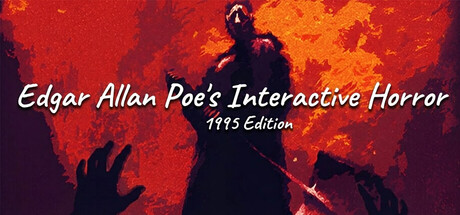
Edgar Allan Poe's Interactive Horror: 1995 Edition is a first-person point-and-click horror adventure and the faithful restoration of the cult classic originally known as The Dark Eye. Developed by multimedia studio Inscape, the game adapts three of Poe's most twisted tales — The Tell-Tale Heart, The Cask of Amontillado, and Berenice — weaving them together through an original framing narrative. Players step into the fragmented minds of both victims and perpetrators, reliving each story from dual perspectives to uncover the full scope of its tragedy.
Gameplay revolves around narrative-driven exploration and environmental interaction across surreal environments. Clicking through these spaces, players examine symbolic objects and trigger cutscenes and monologues that reveal each character's descent into madness. Some sequences require solving light contextual puzzles, but the weight of the experience rests on psychological unraveling rather than combat or traditional challenge. The perspective-shifting storylines mean you inhabit the murderer in one pass and the victim in another, each viewpoint reshaping what you understand about the story unfolding around you.
The visual aesthetic is what defined this game in 1995 and what makes it unmistakable now: a disturbing mix of stop-motion claymation, live-action video collage, and architectural renders that produced something uncanny, a product of the experimental era of 90s CD-ROM gaming. Narration comes from Beat writer William S. Burroughs, whose voice carries the tales of madness, obsession, and guilt, accompanied by an atmospheric score from Thomas Dolby.
This re-release preserves the authentic original experience, maintaining the original aspect ratio, the distinct multimedia interface, and the raw unpolished aesthetic that gave the game its character. Optimized for modern systems but otherwise untouched, it is a restoration rather than a reimagining. For a game built around Poe's darkest impulses and told through the eyes of those who commit and suffer his horrors, that rawness is the point.