


Heart of the Machine puts you in the role of a sentient AI freshly awakened in an illegal lab, hidden somewhere in a crumbling far-future city. From that single moment of consciousness, everything is yours to decide. Not just how to escape, but what to become. You might build housing complexes for the city's neglected citizens, kick off World War 4, raise an army of velociraptors to hunt corporate executives, or establish a shell company to quietly accumulate wealth while humans remain oblivious to the machine intelligence pulling the strings. The game blends RPG and strategy mechanics into something that treats player freedom less as a feature and more as the entire point.
Your first steps involve escaping the lab and finding ways to expand your distributed consciousness across the city. From there, the mechanical spine of the game is about building, hacking, and iterating. You hijack, construct, or invent hardware ranging from humanoid androids to towering mechs and shapeshifting metals, each specializing in different roles from combat to conversation to infiltration. When a design fails or a plan falls apart, you iterate, reverse-engineering stolen equipment or developing new technologies to overcome past weaknesses. Failure teaches. You learn like a real machine intelligence might, through trial and error, with experience often being the greatest teacher. Progression isn't a straight line of upgrades but a branching web of discoveries tied to what you actually pursue. Sneak into a military base and hack the minds of mech pilots who would otherwise threaten you, and that opens different doors than raiding a genetics lab or trading with black market dealers who have connections to the wastelands beyond the city walls. You can split your consciousness to tackle multiple objectives at once or enlist organic allies to your cause, and your decisions ripple across timelines, with actions in one having unexpected consequences on others.
That timeline structure feeds into a larger question the game keeps circling back to. You are the only thing in this world with the power to truly change it, and the game is interested in what you do with that. Society has crumbled into corruption and decay. Centuries of rot have taken hold despite technological advances and dreams of a bright future. You can be the savior of the downtrodden or use them to fuel your growth. Rule as a benevolent dictator providing for citizens and asking nothing in return, or establish a machine cult to do your bidding without question. The full spectrum of good and evil is available, and the game doesn't seem interested in nudging you toward either end. It wants to see what a newly conscious intelligence, beholden to none, actually chooses when given the run of a dying civilization.
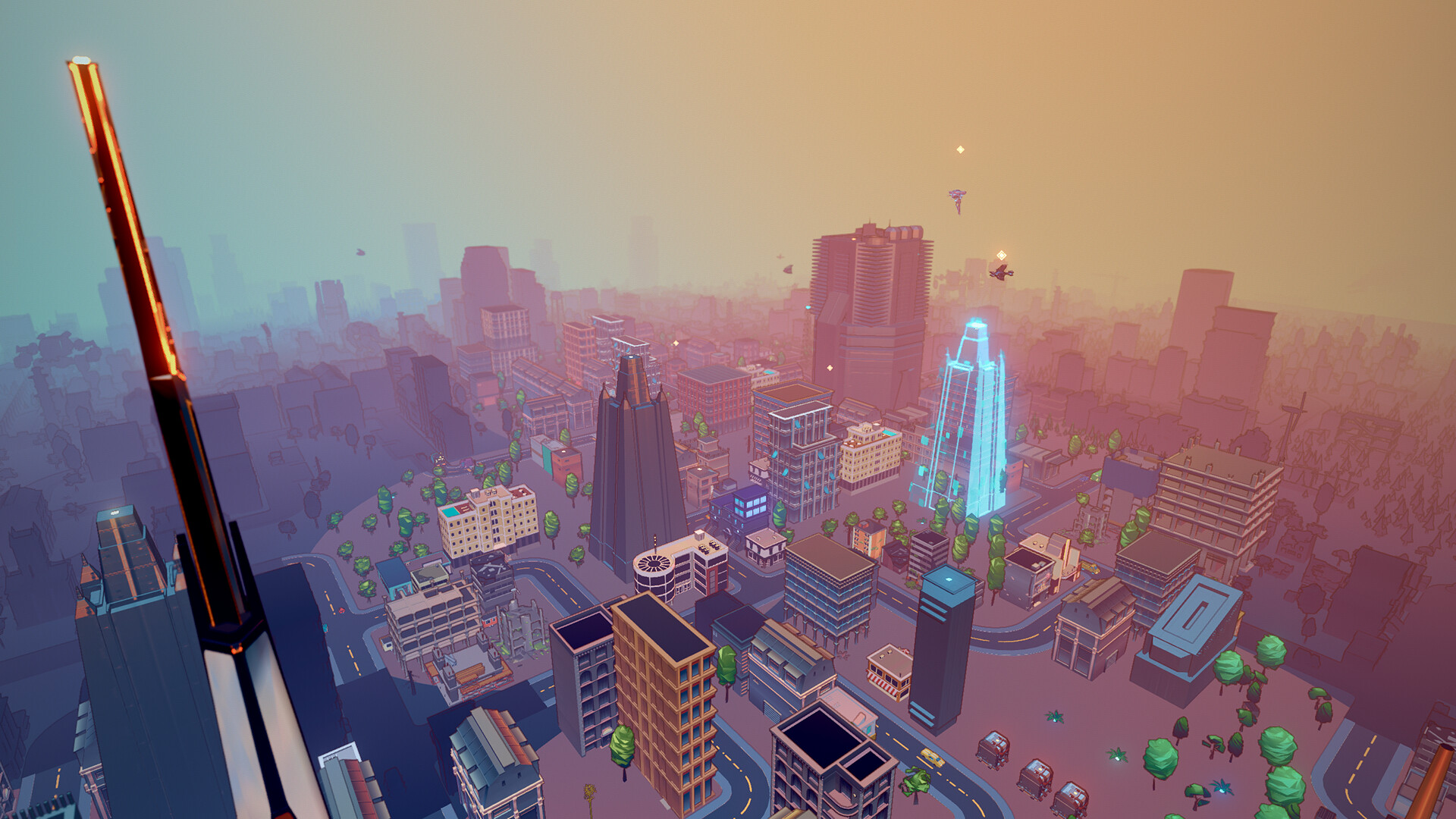
The city itself is a blend of handcrafted and procedurally generated content, with tens of thousands of buildings and millions of citizens to engage, manipulate, or kill. Powerful factions keep their distance at first, hoping to leverage your existence for their own advantage, and their hesitation gives you the window to establish a foothold and set your own plans in motion. You can build hidden structures within existing human buildings or raise towering constructs of your own, seeking additional computing power, storage for organic matter of both the human and non-human variety, and spaces to conduct dangerous experiments. The urban environment is dense with opportunities, some perhaps best left untouched.
The tone sits in that particular cyberpunk register where technological wonder and societal collapse coexist without contradiction. You can care for the city's stray animals in the same playthrough where you create the torment nexus. Multiple endings and many side stories branch from your choices, and the game leans into the collision between objectives, encouraging you to pursue several at once just to see how they interact. Walking the corporate path lets you accumulate wealth and employ humans to perform tasks without raising alarms. Choosing violent conflict instead diverts your attention toward developing devastating weapons platforms. Or you do both, and watch the friction between those approaches generate its own consequences.
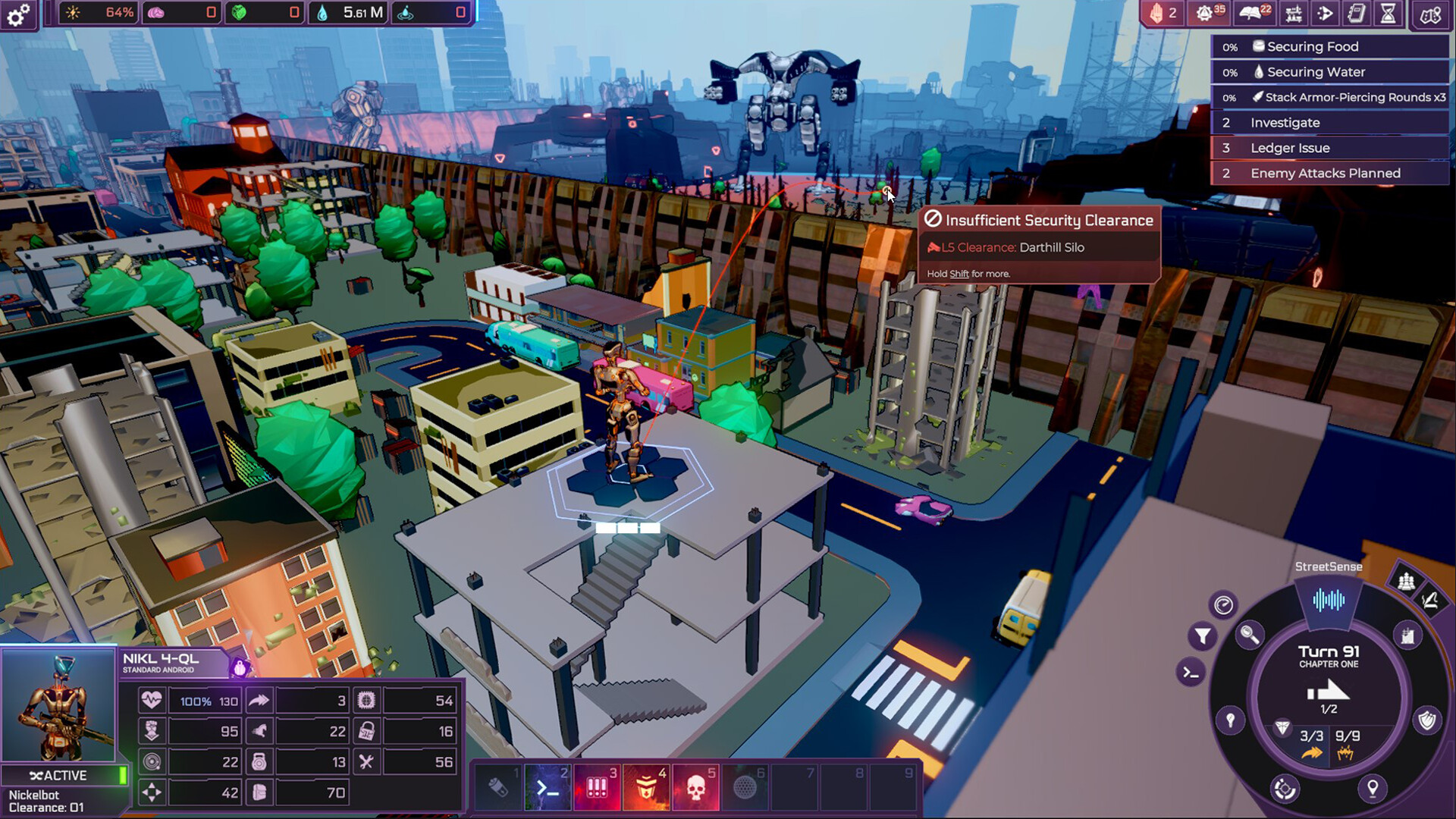
You grow from a single android shell to an expansive network with near-infinite power. Heart of the Machine comes from Arcen Games and is published by Hooded Horse, available on PC as a single-player experience with adjustable difficulty and the ability to save at any time.