

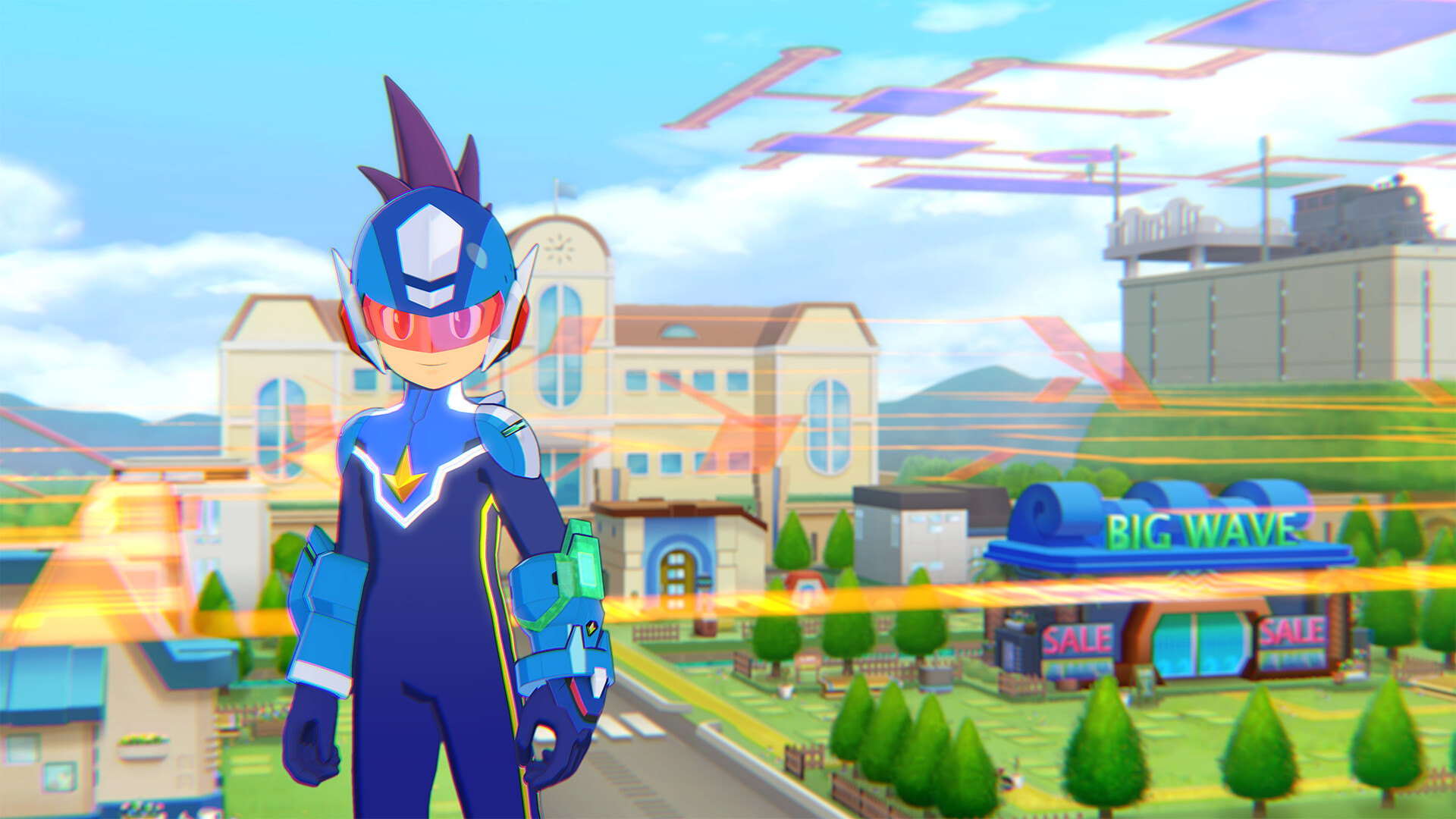
Geo Stelar is eleven years old, grieving, and refusing to go to school. His father, an astronaut, has disappeared, and the boy has retreated into a quiet ritual of watching the stars from his local observatory. It's the year 220X, a world built on Wave technology, and one night Geo's Transer device picks up a signal from space that hits him with a violent electric shock. When he wakes, an alien made of electromagnetic waves called Omega-Xis is standing over him. What follows across the Mega Man Star Force trilogy is the unlikely partnership between a withdrawn kid and an extraterrestrial being, their fusion forming the basis of everything the series asks you to do.
The collection bundles seven games, the full spread of version variants that defined the original releases. Mega Man Star Force shipped in three flavours: Pegasus, Leo, and Dragon, each offering different transformation paths and Battle Cards. The sequels followed the same structure: Star Force 2 split into Zerker x Ninja and Zerker x Saurian, while Star Force 3 divided into Black Ace and Red Joker. Having all seven under one roof means players can finally experience the full spread without hunting down separate cartridges.
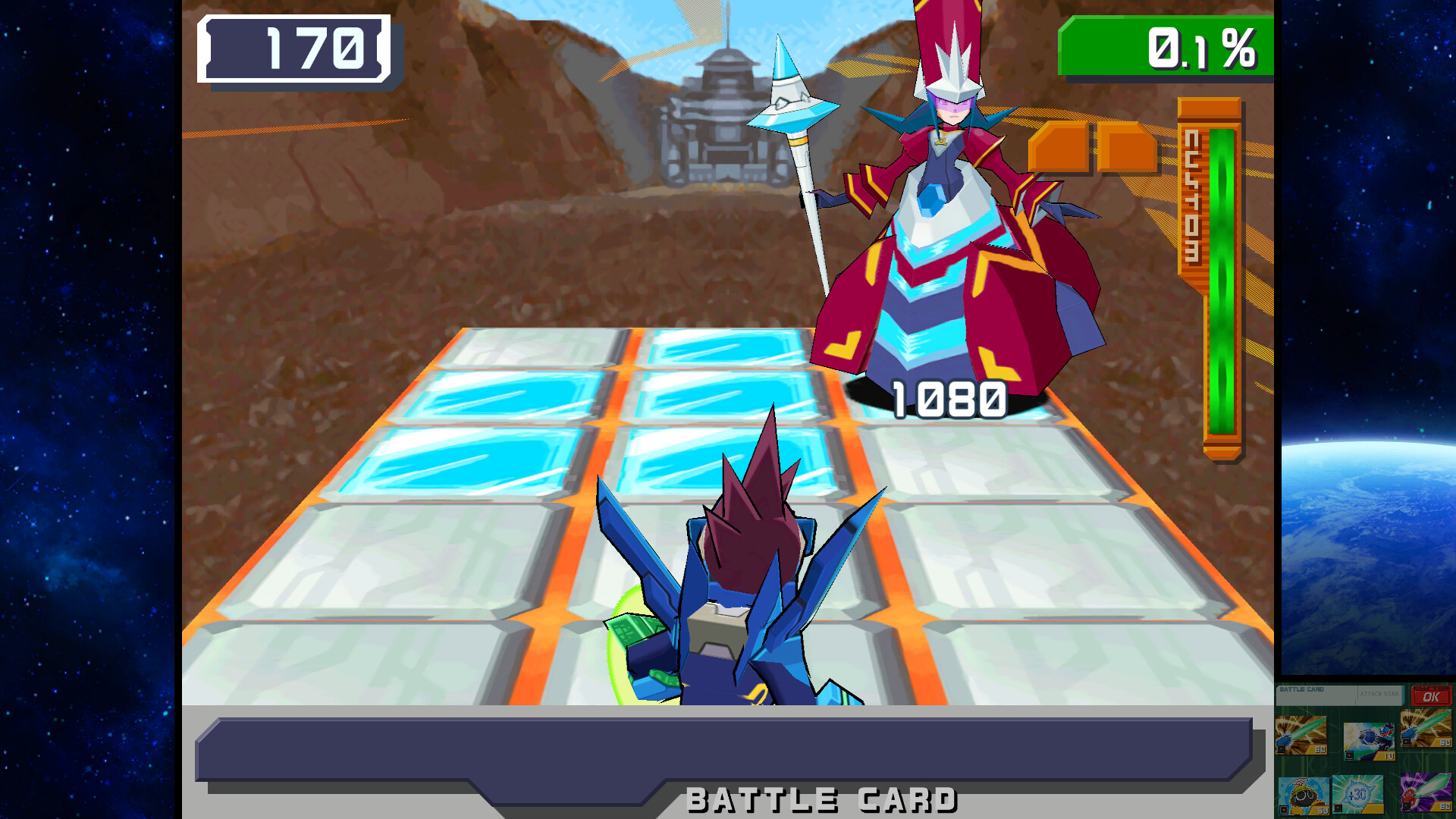
Combat plays out on a vertical grid viewed from behind Geo's shoulder, a perspective that set Star Force apart from its Battle Network predecessors. You move across a three-by-one row, dodging incoming attacks while selecting Battle Cards from a rotating hand to strike back. The cards are the heart of it, representing weapons, abilities, and support effects that you slot into your folder before each fight. Building a folder is half strategy game, half deckbuilding puzzle, balancing raw damage against elemental coverage and combo potential. The Bonus Cards included in this collection, previously locked behind real-life events and toy promotions, open up options that most players never had access to during the original runs.
Online play adds competitive stakes that the handheld originals could only offer through local wireless. Ranked matches pit folders against folders across all three games, while casual and friend matches keep things looser. The series always had a competitive layer buried in its card system, and giving it proper online infrastructure lets that side of the design breathe in a way it couldn't before.
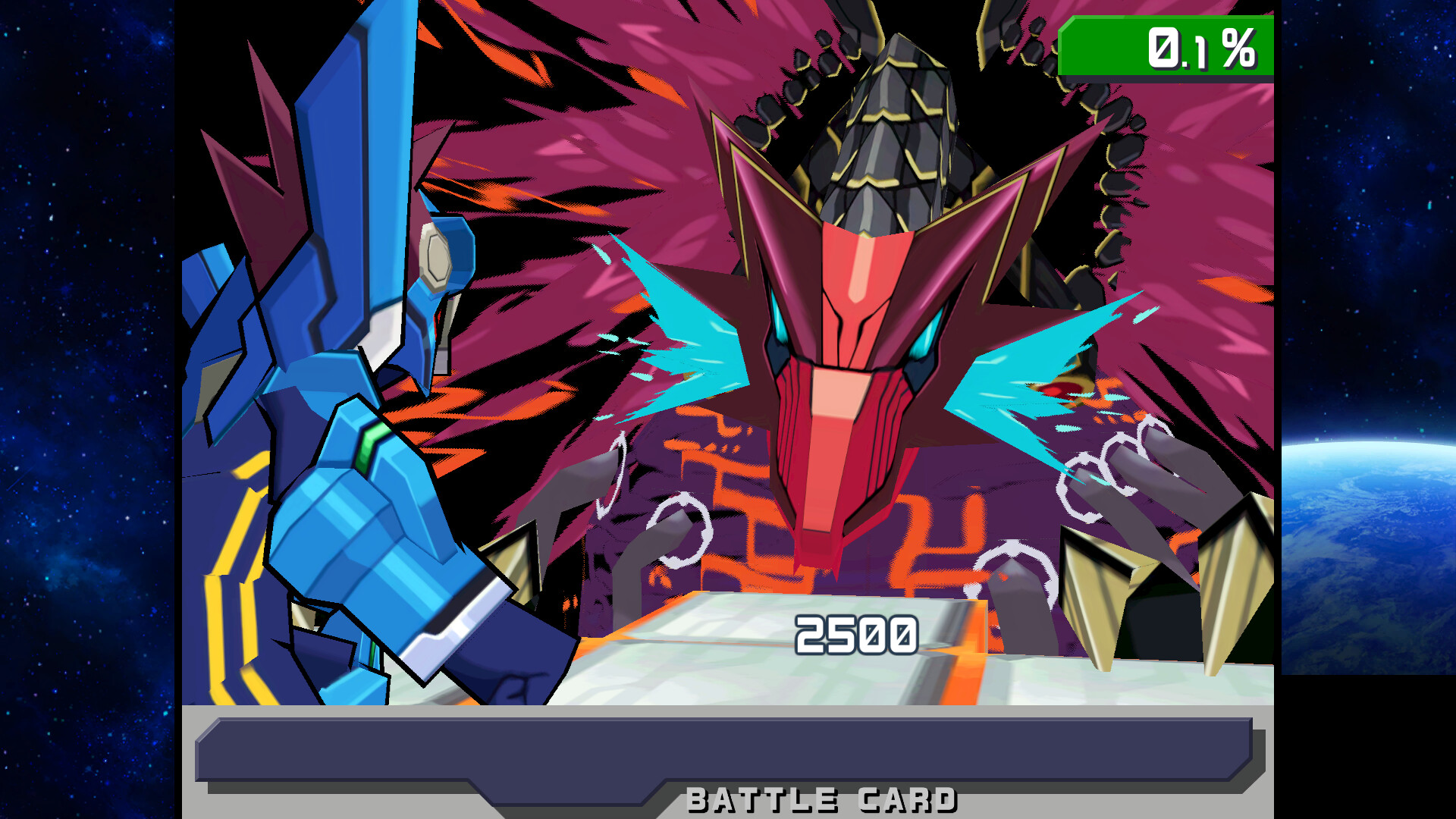
There's a melancholy running through Star Force that distinguishes it from the brighter energy of Battle Network. Geo isn't a confident hero stepping into adventure. He's a kid pulled into something bigger than himself while still processing loss, and his relationship with Omega-Xis starts uneasy before it becomes something genuine.
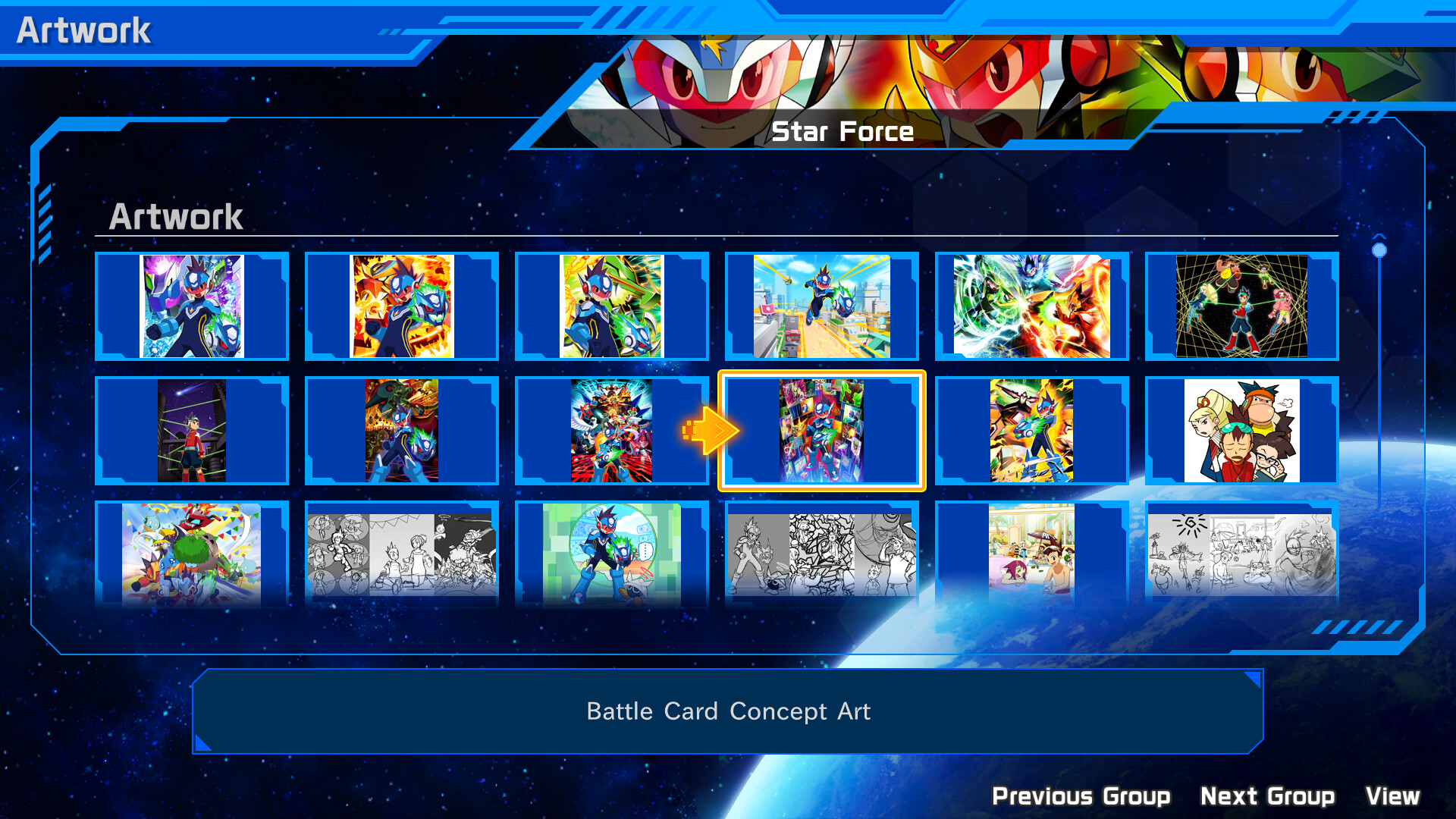
Capcom has layered in customization options that let players adjust the experience in granular ways. Encounter rates can be tuned up or down, the Mega Buster's power can be modified, HP recovery after battle can be toggled, and a speed boost option tightens the pace for anyone revisiting games they've already cleared. An optional graphics filter smooths the original pixel art, and a newly arranged soundtrack sits alongside the originals for battle music. The gallery houses over a thousand pieces of artwork spanning official illustrations, design documents, drafts, and concept art from across the trilogy, plus images of every Battle Card and Bonus Card in the series.