

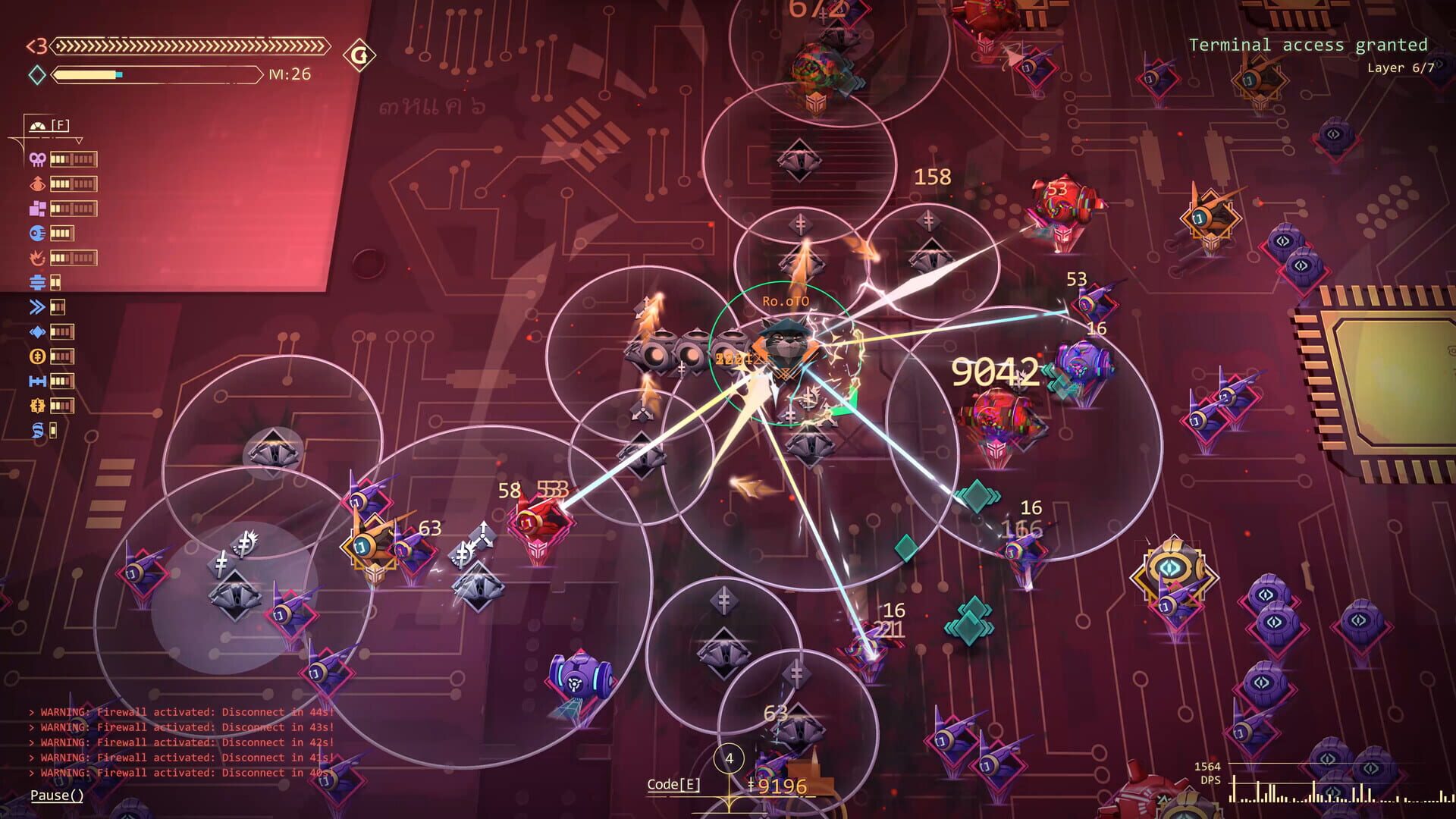
Net.Attack(): Code or Die! has launched its full 1.0 version on Steam, leaving Early Access after eight months of community-driven development. Built by German indie studio ByteRockers' Games, this is a bullet heaven game where your weapons aren't picked from a menu but programmed through a visual coding interface.
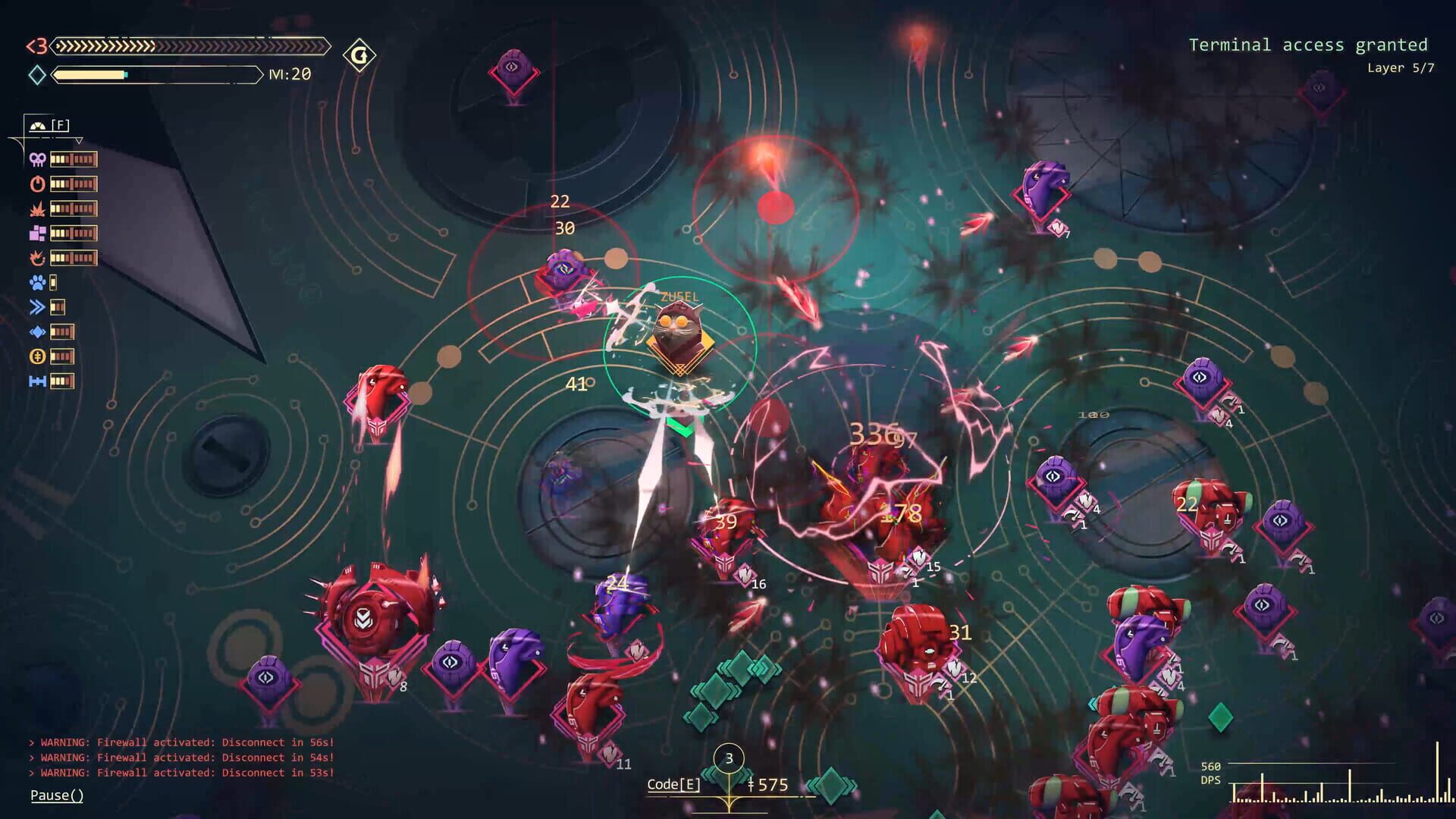
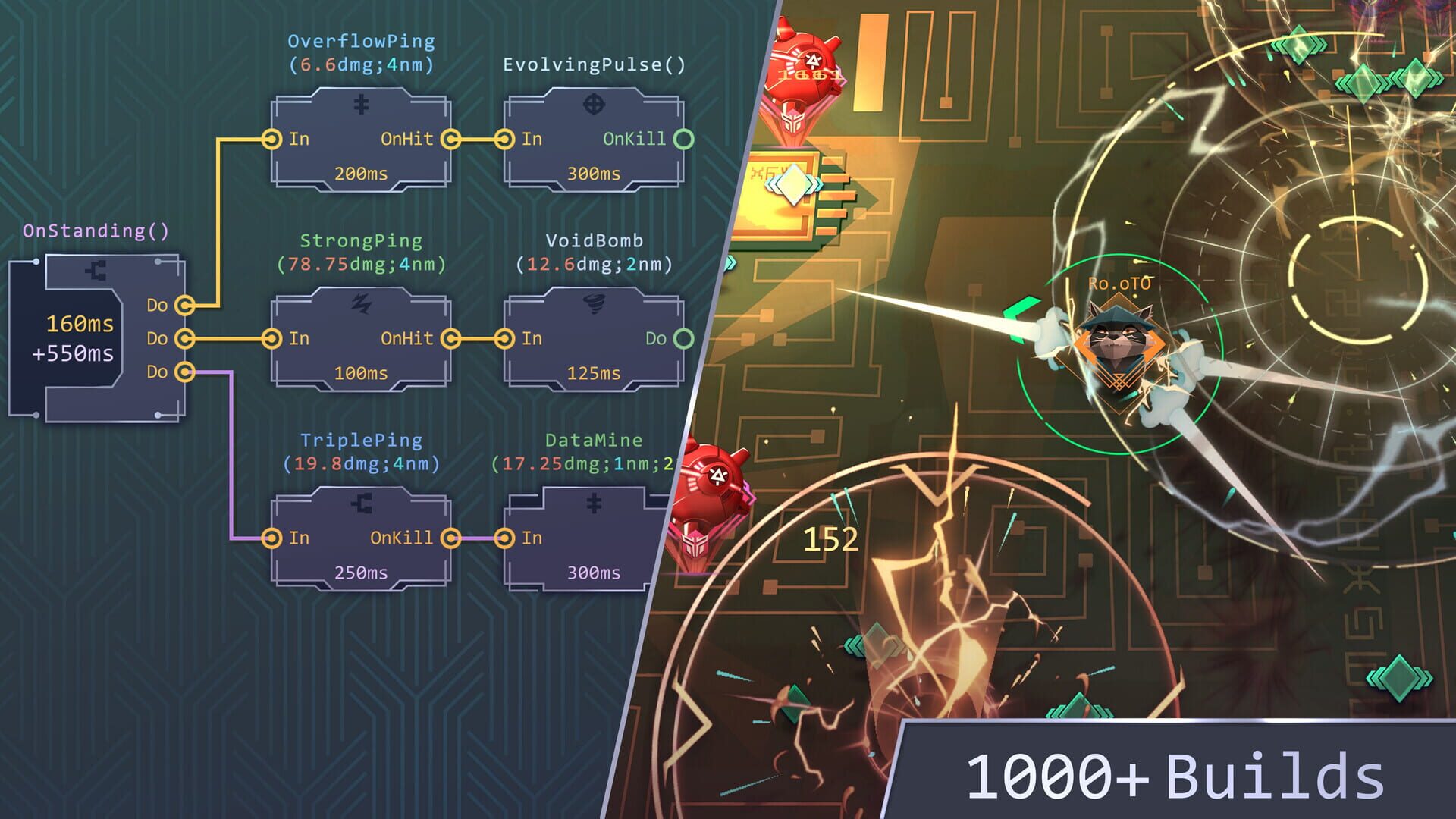
The core of every run is the coding screen. Rather than choosing upgrades from a randomized pool and watching them fire automatically, players drag and drop from over 190 nodes to build their own attack patterns. The distinction matters. In a typical bullet heaven game, your build emerges from what the game offers you. Here, your build emerges from what you can engineer. The nodes combine into algorithms that determine how your projectiles behave, and the game layers on optimization picks that synergize with your code alongside modification drops that can reshape a run entirely. Adapting isn't optional. Enemy hordes scale in strength and variation, and the game is blunt about what happens to players who try to dodge their way through without rethinking their approach: back to the drawing board.
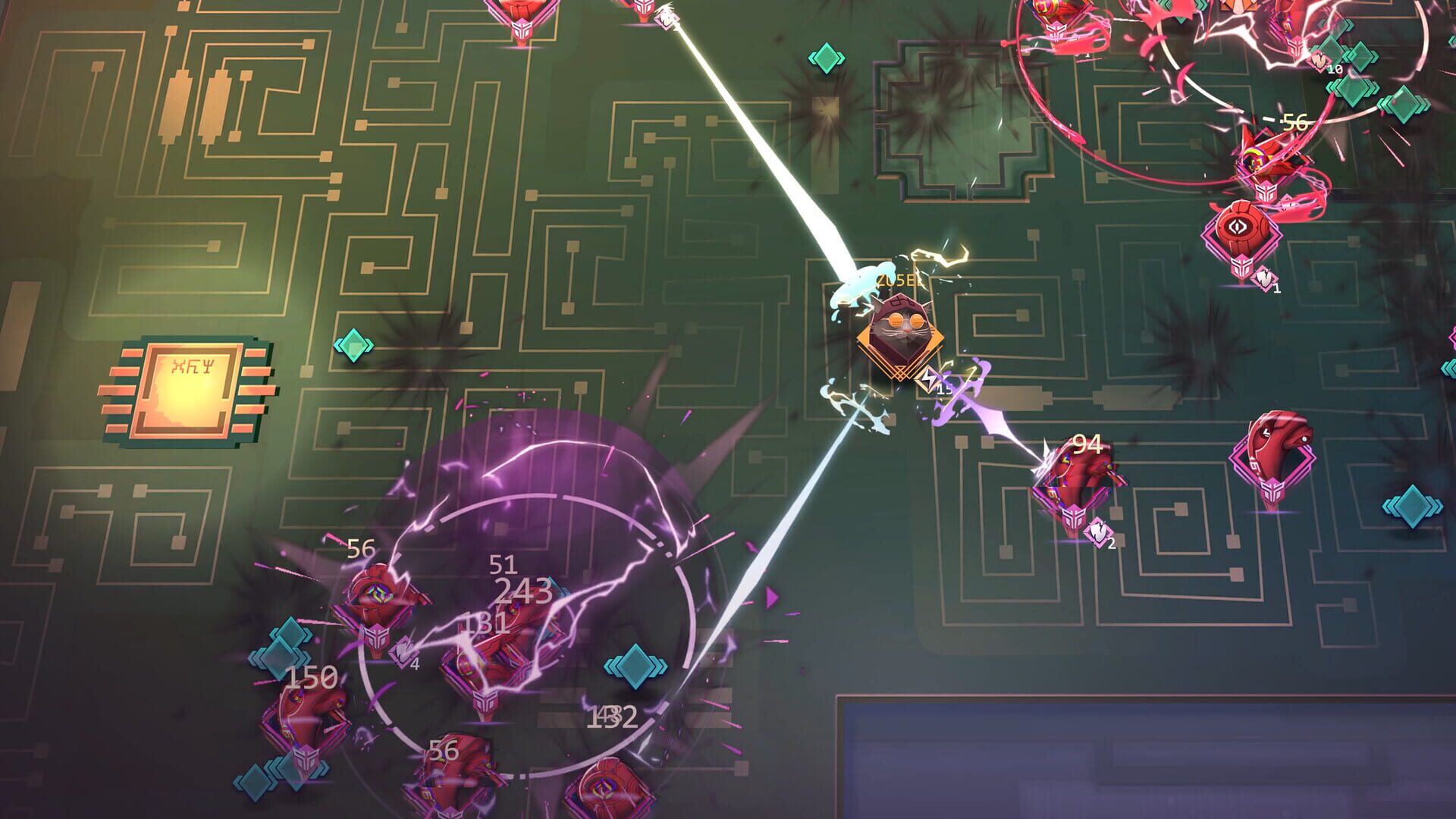
Thirteen unlockable hacker characters populate the roster, six of them new for the 1.0 release. Each starts with unique abilities and a specialization path, but during a run they can pick up access to other playstyles, opening combinations the developers say go beyond what they themselves anticipated. That claim is the game's central pitch and its biggest gamble. Giving players a programming toolkit instead of a preset upgrade tree means the ceiling for creative builds is theoretically enormous, but it also means the floor can feel steep for anyone unfamiliar with thinking in logic chains.
The premise leans into hacker fantasy without taking itself too seriously. You're breaking into enemy systems, surviving the security response, debugging your failures between runs and optimizing your code for the next attempt. The framing is light, a backdrop for the mechanical puzzle at the centre rather than a narrative to follow.
ByteRockers' Games clearly heard the feedback from Early Access about that learning curve. The 1.0 release overhauls the tutorial entirely, walking newcomers through their first session before handing them off to a Bootcamp designed for intermediate players. The Bootcamp teaches more complex node combinations through missions, providing hints when players get stuck. An in-game Documentation system sits alongside existing tooltips for anyone who wants to dig deeper into how the mechanics actually work under the hood. The visual programming approach was specifically chosen to make the coding accessible to non-coders, letting players think in terms of connecting blocks rather than writing syntax.
Multiple regions, varied game modes, and scalable difficulty round out the content, and 56 achievements now sit in the game for players who want structured goals to chase. The tone throughout is playful, leaning into the black-hoodie hacker archetype with a knowing grin rather than any real edge. This is a game about feeling clever, about watching an algorithm you pieced together shred through a wave of enemies because you spotted an interaction nobody told you about. When the code works, the screen fills with the results of your logic. When it doesn't, you know exactly whose fault it is.