

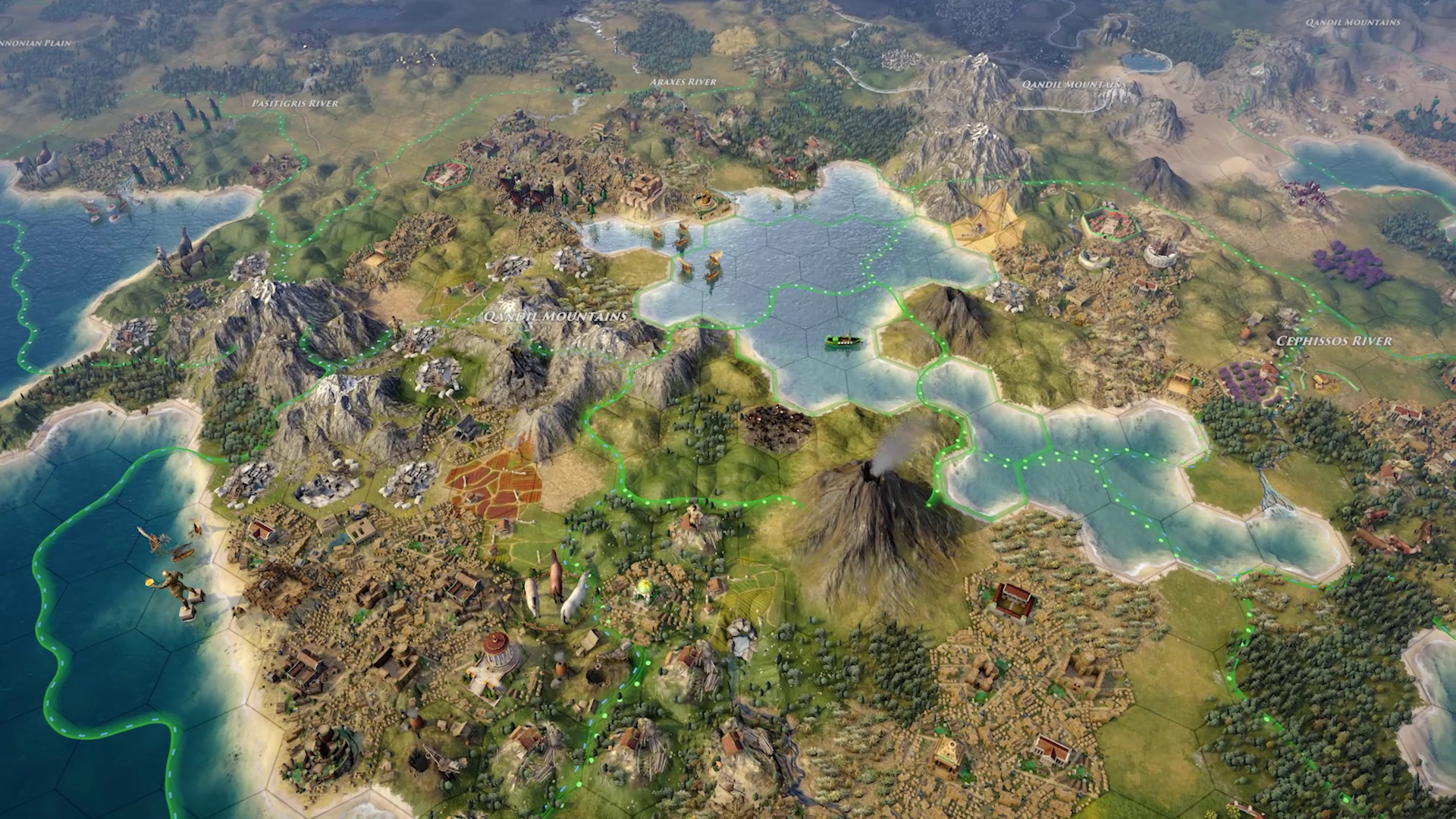
Old World is a historical strategy game from Mohawk Games that reframes the 4X genre around something most entries in the space treat as background noise: the people who actually run an empire. Rather than guiding an abstract civilization across millennia, you lead a dynasty through generations of rule, watching rulers age, grow ill, and die while their heirs inherit whatever legacy — or mess — was left behind. The empire persists, but the hands steering it keep changing.
At the heart of this is a court system built on personalities and politics. Each of the seven playable kingdoms contains four noble families, and placing those families in charge of your cities yields distinct benefits. Keeping them satisfied requires careful management through events, marriages, and political actions. Let a family grow too powerful or too resentful and you risk their ire. The balancing act extends into your own household as well. You can maintain a strong family unit or pursue more illicit adventures, with consequences either way.
Characters throughout your kingdom carry distinct personalities, strengths, and weaknesses. You recruit warriors, philosophers, and builders to serve your court, then assign them as governors, diplomats, spymasters, or military leaders. Different personality archetypes allow court members to perform different tasks within similar roles, so finding the right combinations matters. A tutor for your children might also be a capable general, but their temperament shapes how they perform in each capacity. Over time these characters develop new traits, gain experience, grow old, and eventually pass away, clearing the stage for the next generation to step forward.
The world beyond your borders is populated by unsettled tribes, barbarian marauders, and remnants of previous cultures lurking in unexplored wilderness. Ruins scattered across the map hold artifacts and great heroes of the past. Over 3,000 unique events inspired by history and mythology fire throughout a campaign, triggered by contact with foreign dignitaries, internal court drama, or the pursuit of ambitions tied to conquest, development, and faith. These aren't decorative pop-ups. They form event chains that shape the story of your dynasty in ways that differ from one playthrough to the next.
Old World deliberately breaks from several conventions that have calcified in the 4X genre. Buildings require wood and stone rather than an abstract "industry" resource. Population growth isn't driven by "food" alone. Most notably, the game introduces Orders as a shared resource across your entire realm. Instead of moving every unit once per turn, each unit can be moved multiple times until it becomes fatigued or your Orders run dry. This single change reshapes tactical decisions at every scale, forcing you to weigh whether a critical military push is worth starving your other fronts of action. Technology advancement is randomized rather than following a fixed tree, keeping research decisions unpredictable across campaigns.
Historically inspired scenarios sit alongside weekly challenge games and a choice between randomly generated and handcrafted maps. You can lead Carthage to victory as Hannibal in the Punic Wars, hold your ground against barbarian hordes, or compete against other players in fictional scenarios. Multiplayer spans hotseat, asynchronous, and cloud play. Mod support opens the game further, allowing players to build new worlds, empires, and dynasties drawn from history or fiction.
Designed by Soren Johnson, whose previous work as lead designer on Civilization IV helped define the modern 4X landscape, Old World channels that pedigree into a game that treats rulers as mortal and fallible rather than eternal. Published by Hooded Horse, the game pairs its dynastic drama with a Grammy-nominated soundtrack blending Arabic music with contemporary influences. Empires here don't simply expand or collapse — they outlive the people who built them, or they don't.