

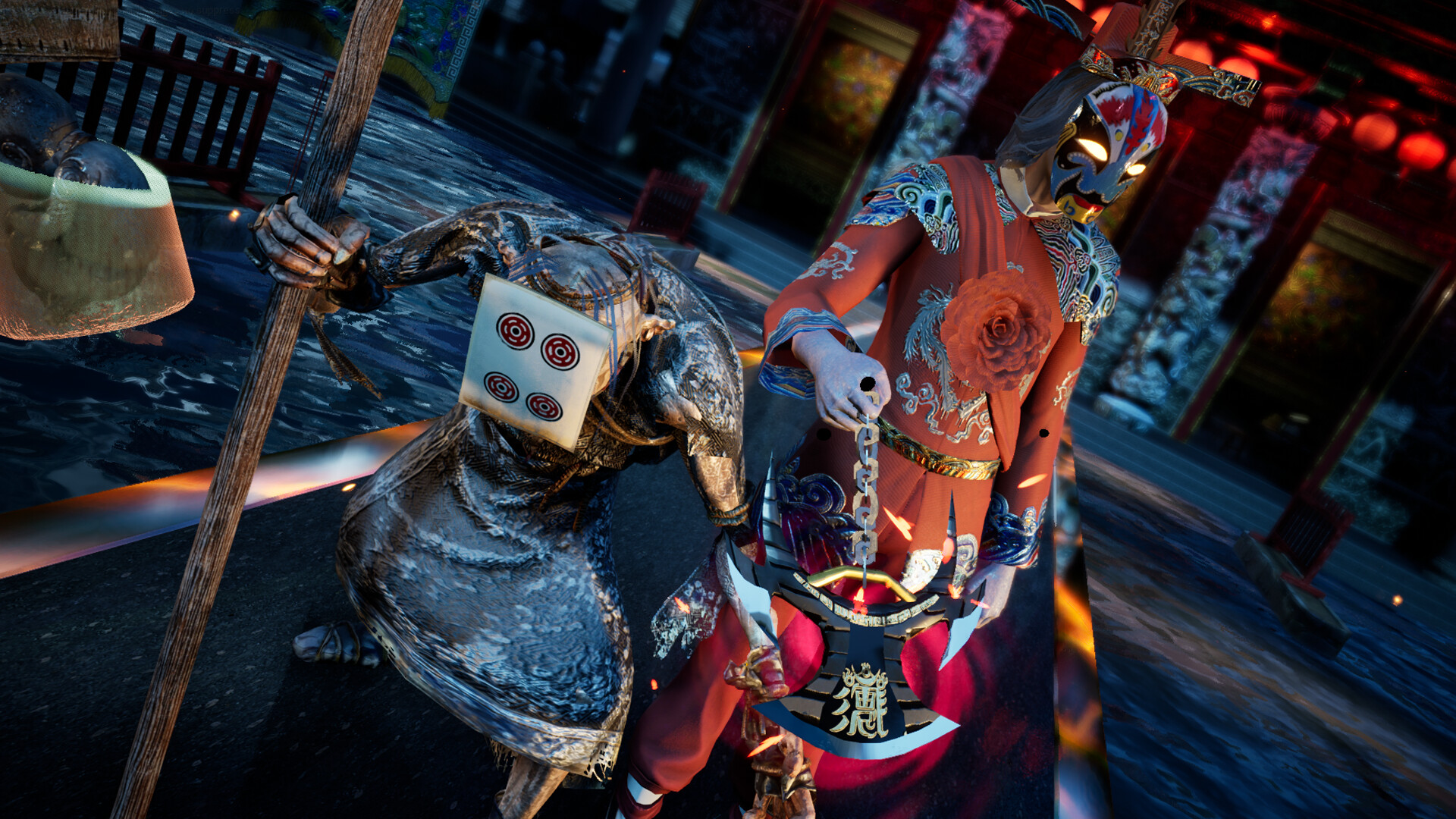
PAGUI-Battle is an asymmetrical multiplayer game rooted in Taiwanese folk tradition, pitting three human players against one ghost player in a struggle between light and darkness. Set across real locations in Taiwan including Alishan, an abandoned hospital, and Chiayi Train Station, dark forces have erected forbidden altars at these locations, and the human side must destroy them before chaos spreads.
Ghost players rely on traps, cursed artifacts, and the aid of the Wandering Soul Lord in defending the altars. During character selection, ghost players choose from four types of sinister artifacts that enable distinct playstyles such as Assassin Build, Spirit Summoner, or Kiting Tactics. Placing these tools along key routes to lure human players is essential for triggering traps and shifting momentum. The human team meanwhile must gather resources, solve puzzles, beat mini-games, and destroy any altars they find as quickly as possible, all while vulnerable to ambush. When enough time passes the ghost enters a frenzy state, confronting the humans head-on in a final showdown.
Each character can be shaped through a Talent System that transforms abilities in specific ways. The Fallen Taoist can convert a straight laser into a rotating Electric Maze Rod. The green-faced Guan Jian Shou, if they locate the Five Thunder Talismans during a match and pair them with the right talents, can turn a jumping attack into a triple lightning strike. Fate Tablets introduce random elements to each battle, ensuring no two matches play out identically.
Developed by padendon, PAGUI-Battle grounds its supernatural premise in tangible cultural detail. Martial arts animations were captured from practitioners and masters using motion capture technology, while spells are based on Taoist practices reproduced under the guidance of Taoist priests. The haunted houses and temples in the game are real locations scouted firsthand by the production team. Whether players choose to exorcise evil or defy fate from the other side, the battlefield is built on places the developers walked themselves.