

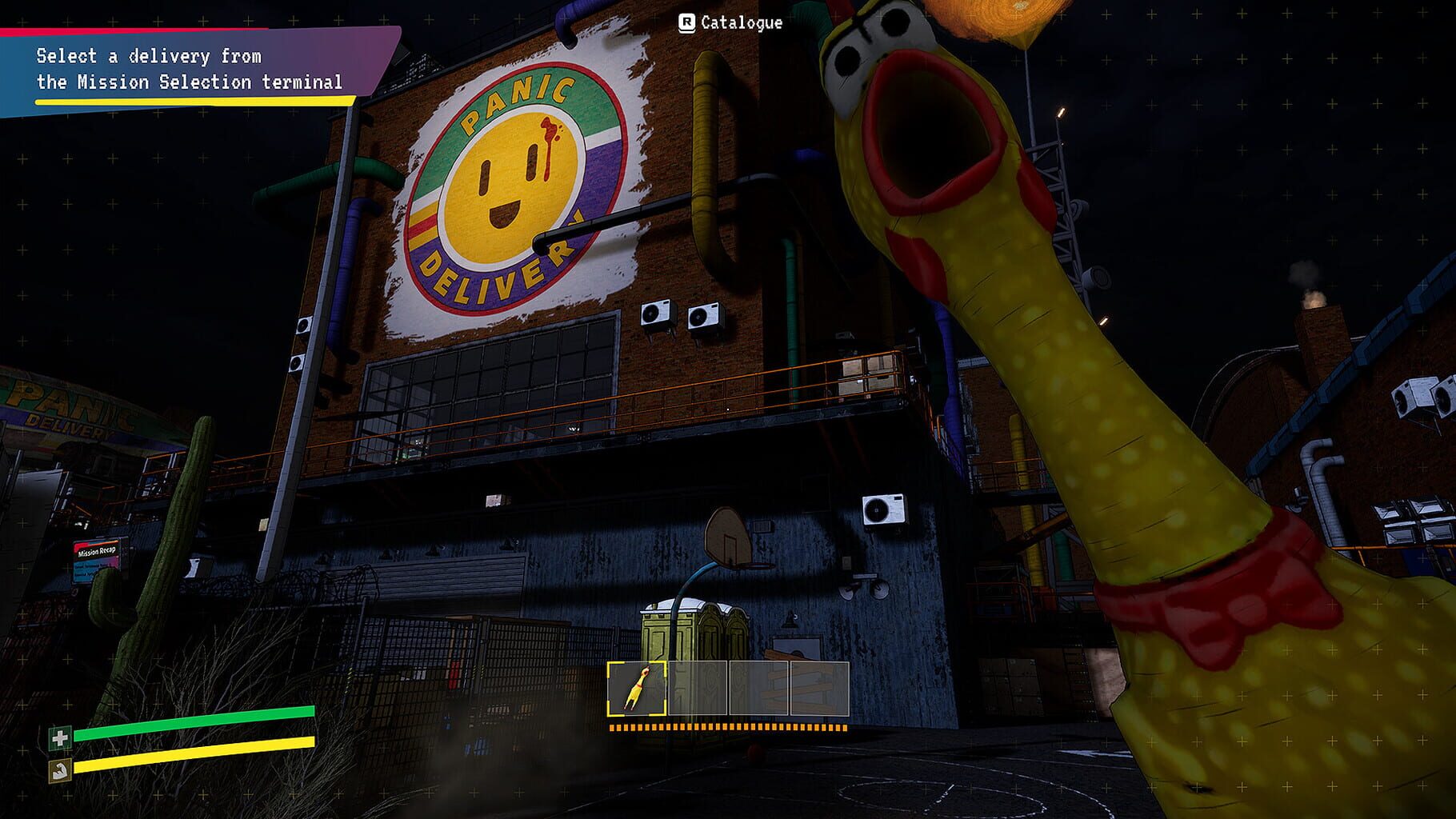
Panic Delivery is a four-player online co-op horror comedy from Invader Studios, the team behind Daymare: 1998 and Daymare: 1994 Sandcastle. Launching in Early Access on PC via Steam in Q2 2025, it drops players into a dystopian world where monsters run society and humans exist primarily as cheap, replaceable labour.
The world of Panic Delivery operates on a simple corporate logic: humans are cloned, put to work, and consumed when they stop being useful. Monsters aren't lurking in the margins of this society, they are the society, running businesses, placing orders, and treating their human couriers as something between employees and appetizers. The whole thing is dressed in the language of cheerful corporate onboarding, employee handbooks and insurance policies that cover your death by deploying a fresh clone to finish your shift. It's a workplace comedy where the workplace genuinely wants to eat you, and the tone walks a line between creepy atmospheres and absurd, tongue-in-cheek humour that keeps the horror from ever settling into anything too grim.
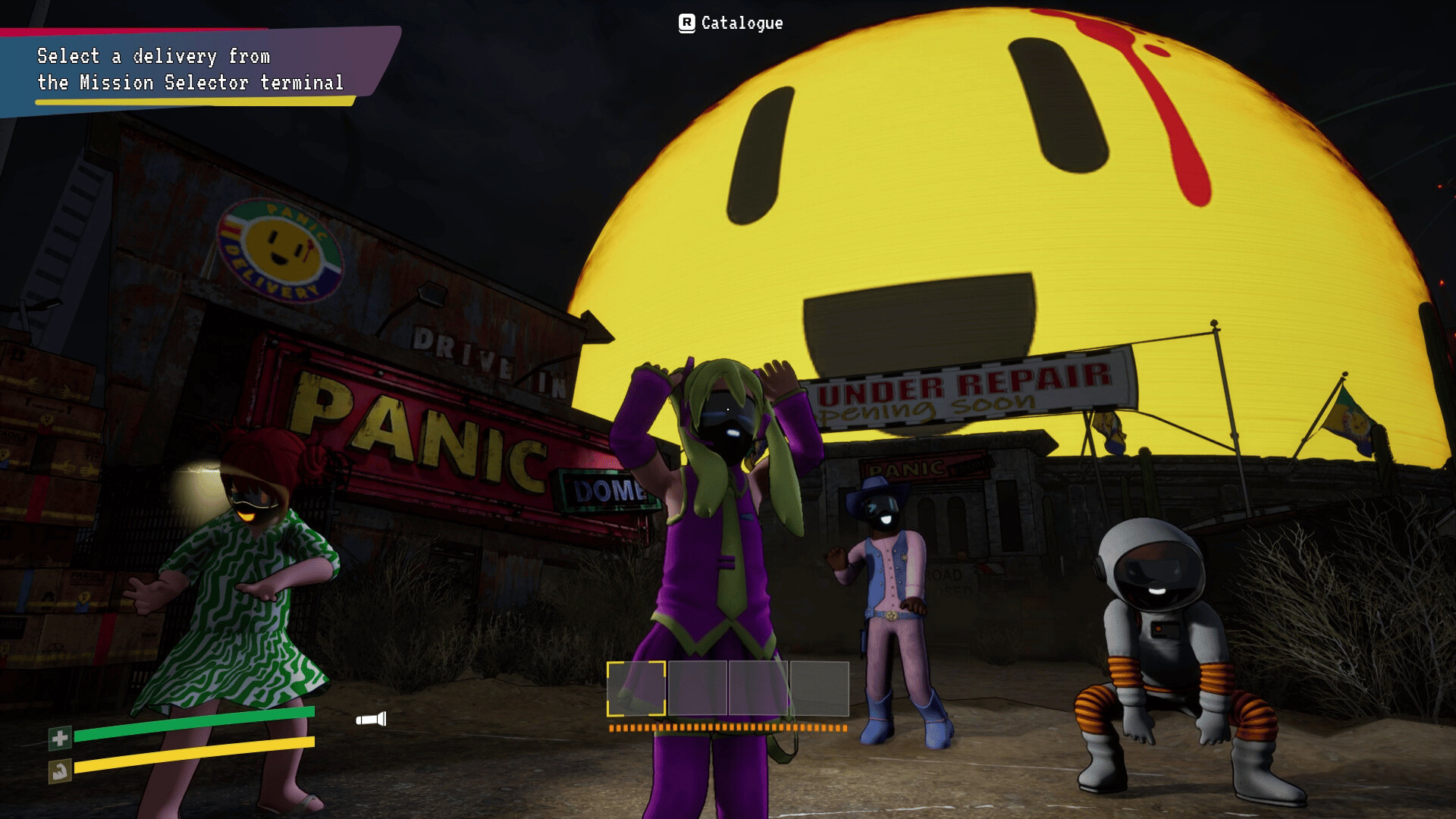
You play as one of those couriers, a disposable clone tasked with delivering packages across locations that have no business being on any delivery route. A monster-infested haunted amusement park, the Panic Factory where human clones are manufactured, and a mysterious Antarctic base hiding alien secrets all serve as operational zones. Each location brings its own hazards and its own flavour of chaos, and procedurally generated levels mean the layout shifts between runs. The monsters inhabiting these places are varied in personality and behaviour, each with their own preferences and ways of interacting with couriers. The game encourages you to study them closely, ideally from a distance you can actually survive.
The premise sits on a sharp piece of satire about expendability. You are not a hero fighting back against the monster regime. You are a gig worker with a quota, and the company values your output far more than your continued existence. Management watches how you spend every life, and if the monsters along your route don't kill you, failing to meet expectations will. A human resistance exists in the margins, offering smuggling missions where you prepare and deliver special packages using unique tools, but even rebellion here is framed as just another type of job. The comedy comes from how thoroughly the game commits to this framing, treating clone death as a minor HR inconvenience and packaging genuine danger inside the breezy language of employee benefits.
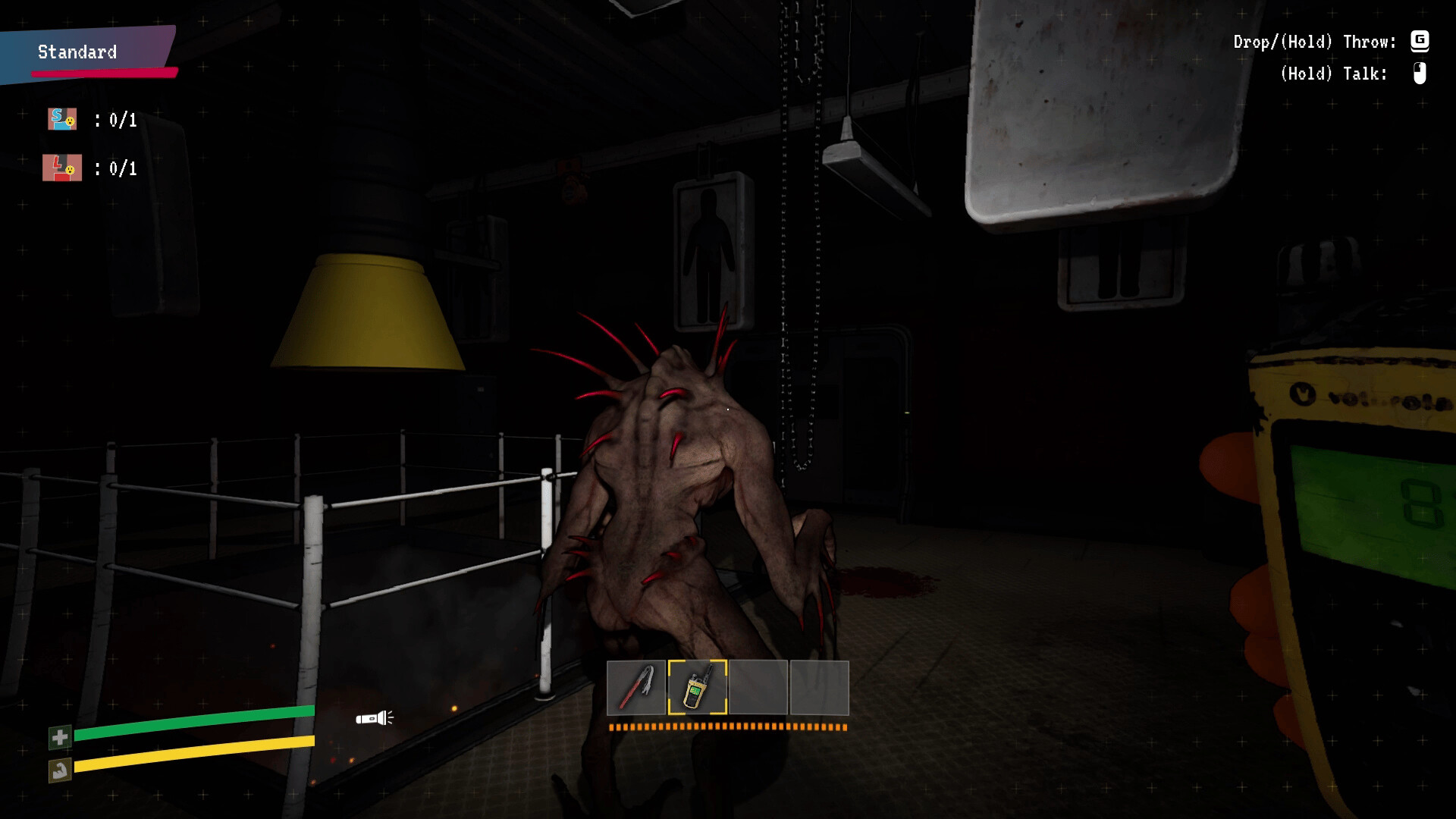
Every shift comes down to getting packages from one place to another while everything around you tries to prevent that from happening. Delivery missions have you transporting cargo of varying risk and fragility through hazardous environments, where harder jobs pay better if you can keep both yourself and the parcel intact. Recovery missions send you after lost cargo using tracking devices, venturing into dangerous terrain to retrieve what previous couriers couldn't. Smuggling missions tie into the human resistance, carrying contraband that management absolutely cannot find out about. Across all three types, you have access to weapons, gadgets, traversal tools, and monster repellents, though sometimes running really is the best option. Speed, care, and strategy all factor into your earnings, with bonuses for quick and intact deliveries keeping you on the good side of both clients and your monstrous bosses.

Click to load trailer from YouTube
By clicking, you agree to YouTube's privacy policy. Data will be shared with Google.
What holds the tension together is the 99 lives system. Your team shares a pool of 99 lives across a session, and every death chips away at that number. Run out and everything resets, wiping packages, items, and earnings from that session, while individual progression like cosmetics, challenges, and titles stays intact. It's a system that makes death feel simultaneously cheap and consequential. You can afford to be reckless, to throw yourself at a problem and respawn seconds later, but each clone burned brings the whole team closer to losing everything they've worked for that shift. The result is a rhythm that swings between frantic sprinting and genuine dread, one minute carefully navigating fragile cargo through a hostile environment, the next screaming over proximity chat while a teammate draws something large and hungry in the wrong direction. Physics-driven chaos ensures no two shifts play out the same way, and the shared life pool means every player's mistakes belong to everyone.