

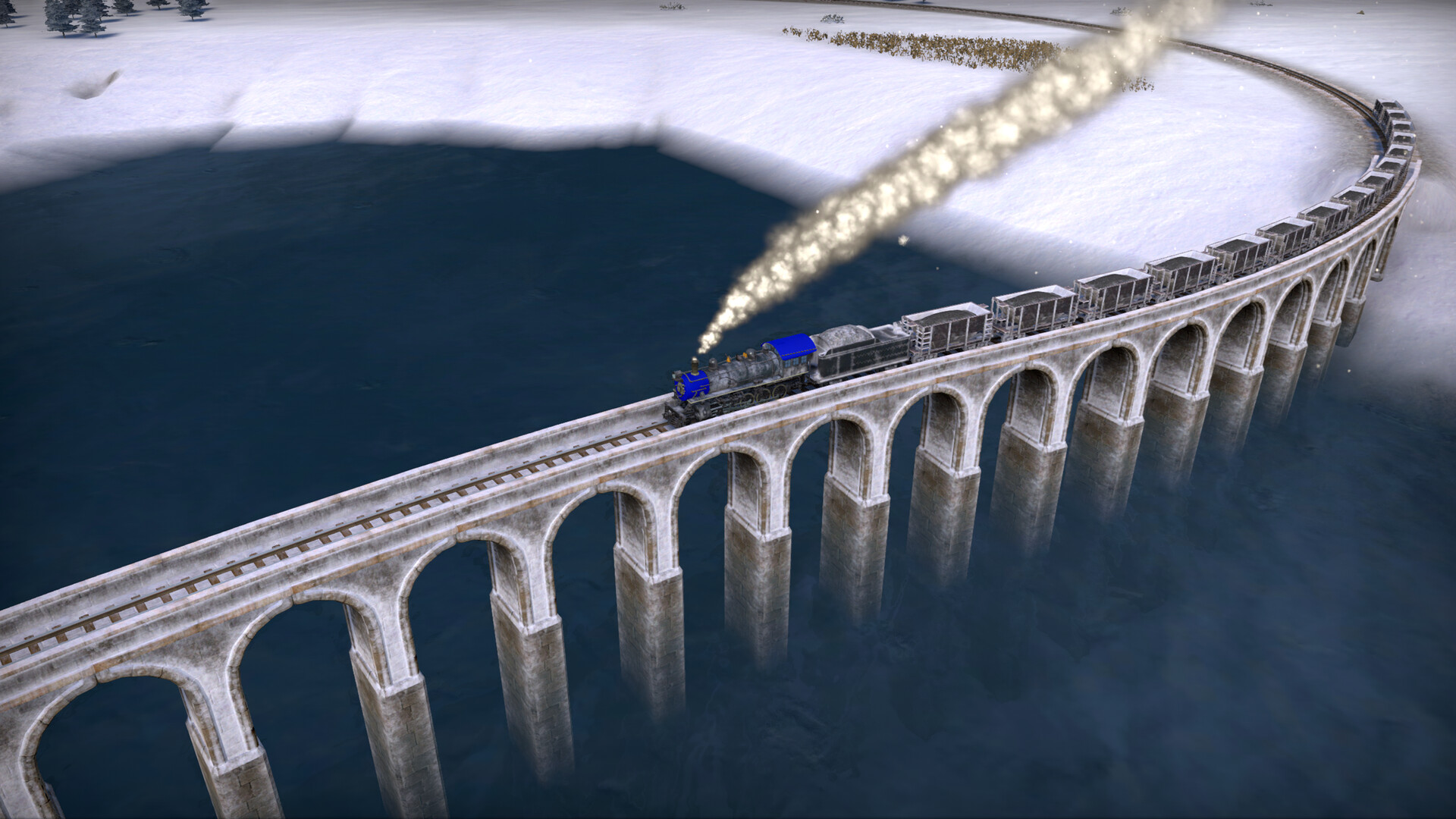
Railroad Corporation 2 is a train tycoon simulation set at the turn of the 20th century, placing players in the role of a railroad magnate building a corporation from the ground up during the dawn of electrification. Developed by Corbie Games and published by Iceberg Interactive, this is a game about seizing a technological turning point. Electric and diesel locomotives are arriving, and the question is whether you can build the infrastructure to harness them before your rivals do.
The foundation of everything here is track. Players lay rail across vast landscapes, connecting regions to promote trade and supply their growing organization. Tracks can be upgraded over time, unlocking faster diesel and electric locomotives that increase speed and efficiency for delivering goods across the country. Managing that network means more than just drawing lines on a map: semaphores control the flow of traffic, keeping junctions clear and trains running on schedule. Bridges, tunnels and level crossings let players push their rail through difficult terrain, constructing a web of routes that must function as a coherent system rather than a tangle of competing lines.
Cities sit at the heart of that system. Players establish settlements and cultivate their growth by researching and constructing production facilities, hospitals, banks and public buildings. Power plants supply electricity to both cities and railroads, and upgrading these structures pushes the corporation toward its full potential. When resources grow scarce, geological exploration unlocks additional materials and opens new ways to develop the landscape further.
The business side of Railroad Corporation 2 carries as much weight as the engineering. Players analyze accounting reports to assess their fiscal health, making strategic decisions about where to invest. A Financial Department offers access to loans and bonds, infusing the corporation with capital when needed, though each financial choice carries its own risks. Commodity trading follows a buy low, sell high philosophy where player actions can ripple through global prices, shaping the market itself. A Lobbying Department lets players influence government policies and local regulations, securing advantages like tax breaks or reduced construction costs through strategic political maneuvering.
The corporation itself is a machine that needs building from the inside. Players construct new departments covering research, finance, geology and lobbying, each opening distinct opportunities. Staff are hired and managed within each department, their passive abilities enhancing operations across the board. As departments expand and upgrade, higher-level employees become available for recruitment, bringing greater productivity and pushing the corporation toward larger ambitions.
Multiple modes shape how all of this plays out. A story-driven campaign guides players through the growth of their corporation, while online multiplayer supports up to four players competing head to head or cooperating in co-op. Sandbox mode strips away objectives for solo empire building, and a map generator lets players create customized maps with different biomes, terrain types, sizes and raw materials in both single and multiplayer. The tools for building a railroad empire are extensive, but the competition for dominance over those electrified rails is what gives every decision its edge.