

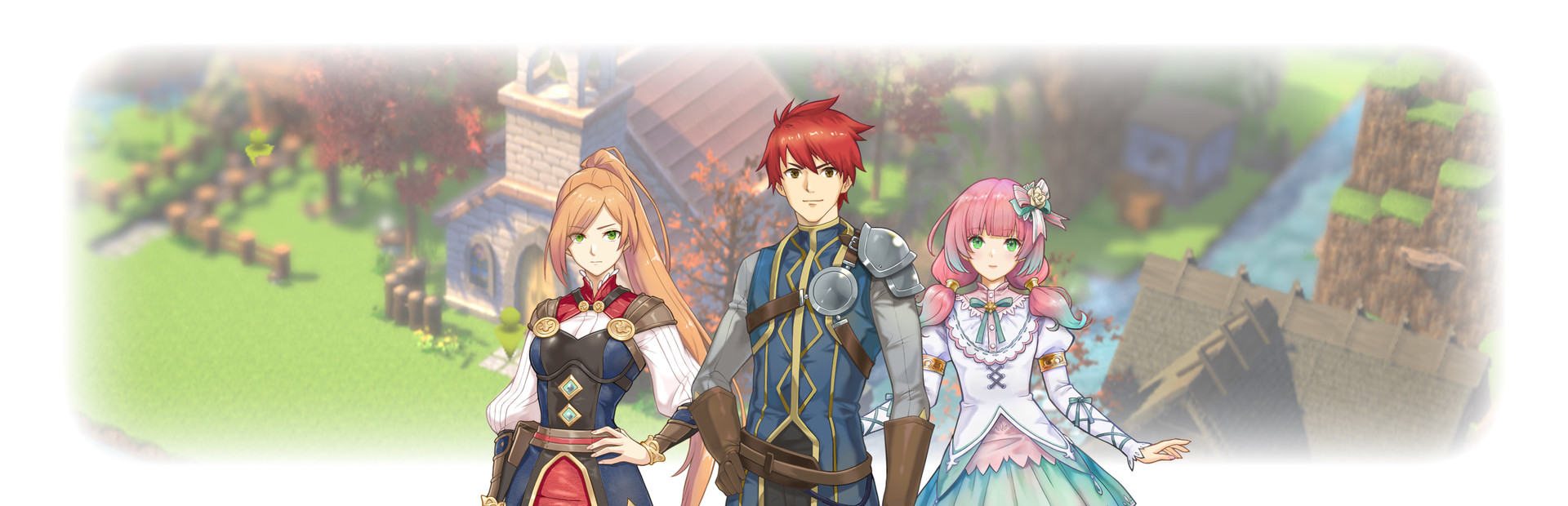
RPG Developer Bakin is a game creation tool from SmileBoom that lets players build RPGs, adventure games and action games without writing a single line of code. Available on PC through Steam, it replaces programming with a visual event system and a suite of editors designed to make the process of building a game feel like playing one.
The core of Bakin is its event editor, a panel-based system where game logic is assembled by arranging and combining pre-built blocks. Panels cover the fundamentals: conversations, character repositioning, branching choices. String them together and you have a scene. Layer in conditions and variables and you have systems. The approach removes the traditional barrier of scripting while still allowing for complexity, since the panels can be combined in ways that produce genuinely intricate event chains. Templates for common functions like party management, item acquisition and map transitions come included, ready to be dropped in and tweaked rather than built from scratch. For those who do want to go deeper, Bakin supports C# plug-ins to extend the tool's functionality beyond what the visual system offers, giving more experienced creators room to push past the defaults.
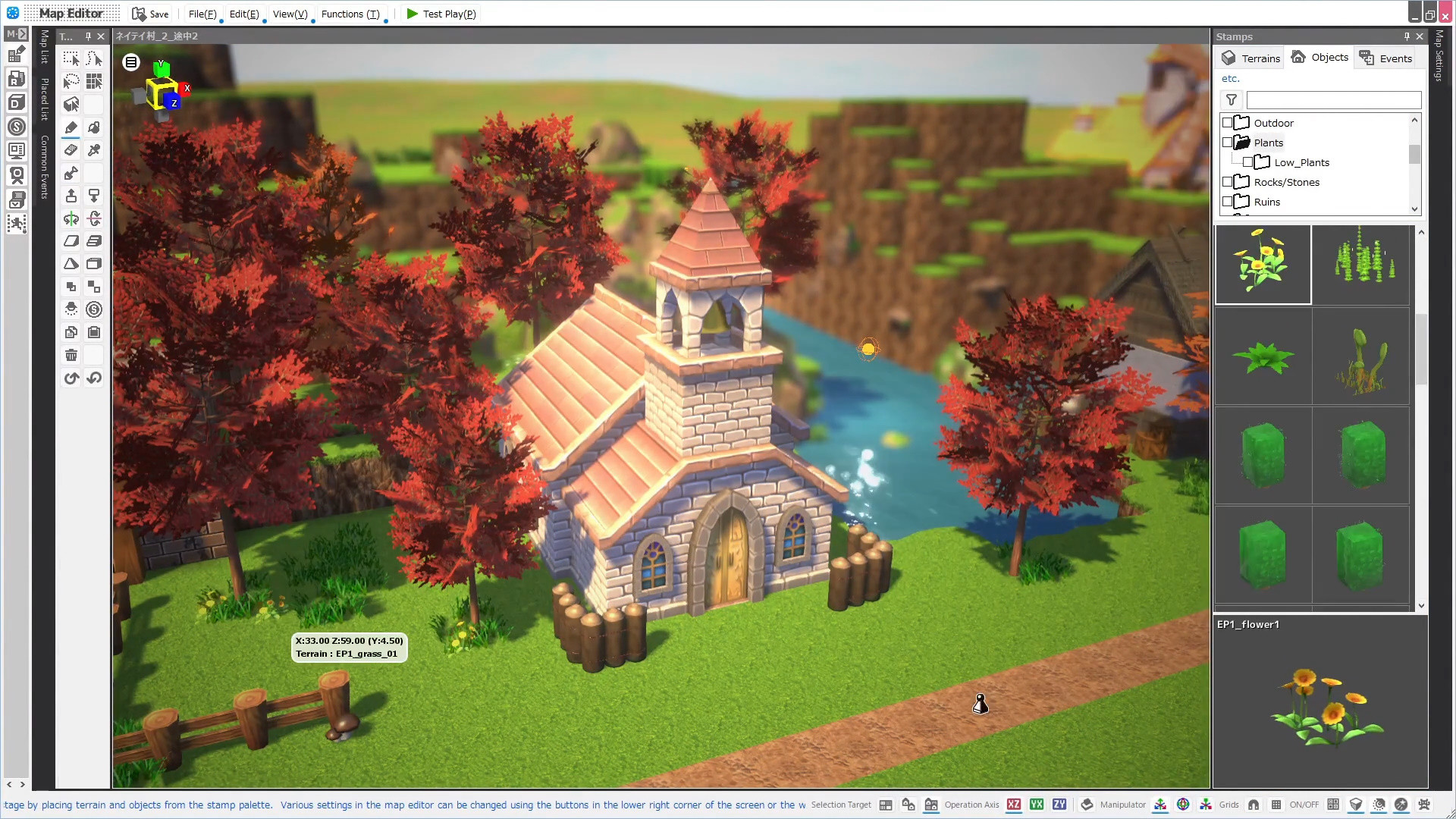
Map creation works through a drawing-style editor where terrain is sculpted by raising and lowering ground, then populated with objects like plants, buildings and furniture. Every placed object can be repositioned, scaled and rotated freely, and individual pieces can be combined to form custom structures. A house built from separate wall, window and balcony components becomes something distinct rather than a prefab pulled from a library. The editor is designed to feel immediate, closer to sketching than constructing, keeping creative momentum moving rather than bogging it down in technical placement.
Visual presentation gets its own set of tools. Post-effects handle depth-of-field blurring and screen-wide lighting changes, while a toon shader offers a cartoon-style look for projects that lean in that direction. A mask function hides portions of an image and a decal system applies 2D assets onto surfaces like stickers. A layout tool lets creators redesign the game's interface itself, customizing how menus, HUD elements and screen information appear to the player. A dedicated camera tool handles in-game cinematics and dynamic angles during play, giving creators control over how their scenes are framed and how the perspective shifts during key moments.
Bakin ships with bundled assets covering 2D and 3D character graphics, building models, particle effects and sound data, with additional free DLCs expanding that library further. Separate paid DLCs add more on top. Creators can also import their own 3D models, pixel art, illustrations and audio, so the bundled content serves as a starting point rather than a ceiling. A database system handles the granular side of game design, managing detailed settings for characters, items and the other data that underpins an RPG's mechanical layer.
The recently released Ver. 2.3 update adds an enemy party function and message preview alongside other additions aimed at expanding battle and store system flexibility. Improvements to event creation and debugging tools round out the update, with SmileBoom continuing to build out the tool's capabilities through these major version releases.
A free trial version is available on Steam with limited features, letting prospective creators test whether the tool runs properly on their system before committing. Game data built in the trial carries over to the full version. Sample games are also available separately, offering a look at what Bakin-made projects actually look and play like in practice.
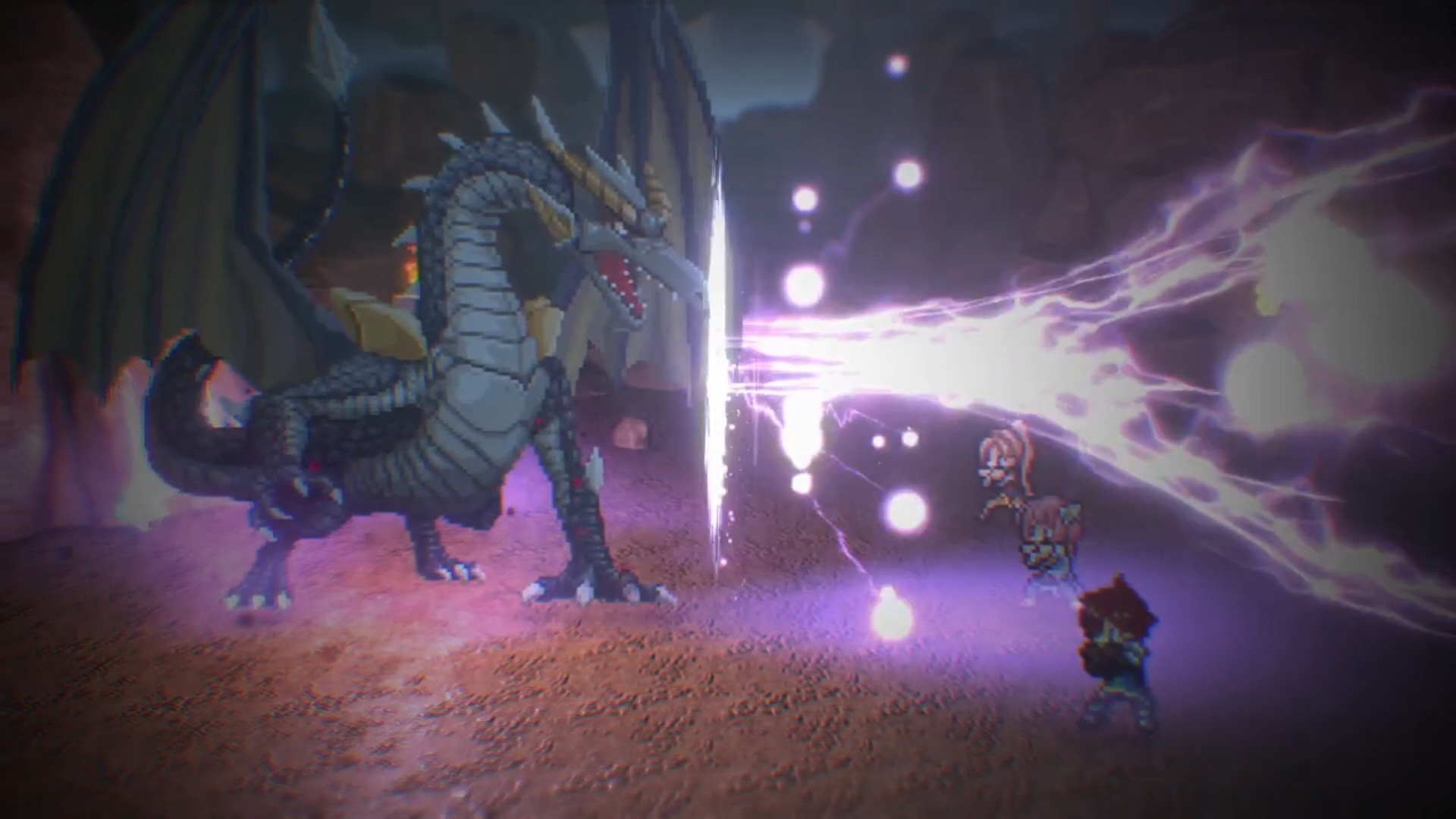
Games built with Bakin can be distributed royalty-free whether they are sold commercially or released for free. That policy removes the financial friction that some creation tools impose, making Bakin as much a publishing pipeline as a development environment. The tool sits in a space occupied by a handful of other no-code game makers, but its focus on 3D RPGs with customizable visual presentation and a flexible event system gives it a specific identity within that field. What it offers is a contained but capable workspace where the distance between having an idea for a game and actually building one is measured in panels arranged on a screen rather than lines written in an editor.