

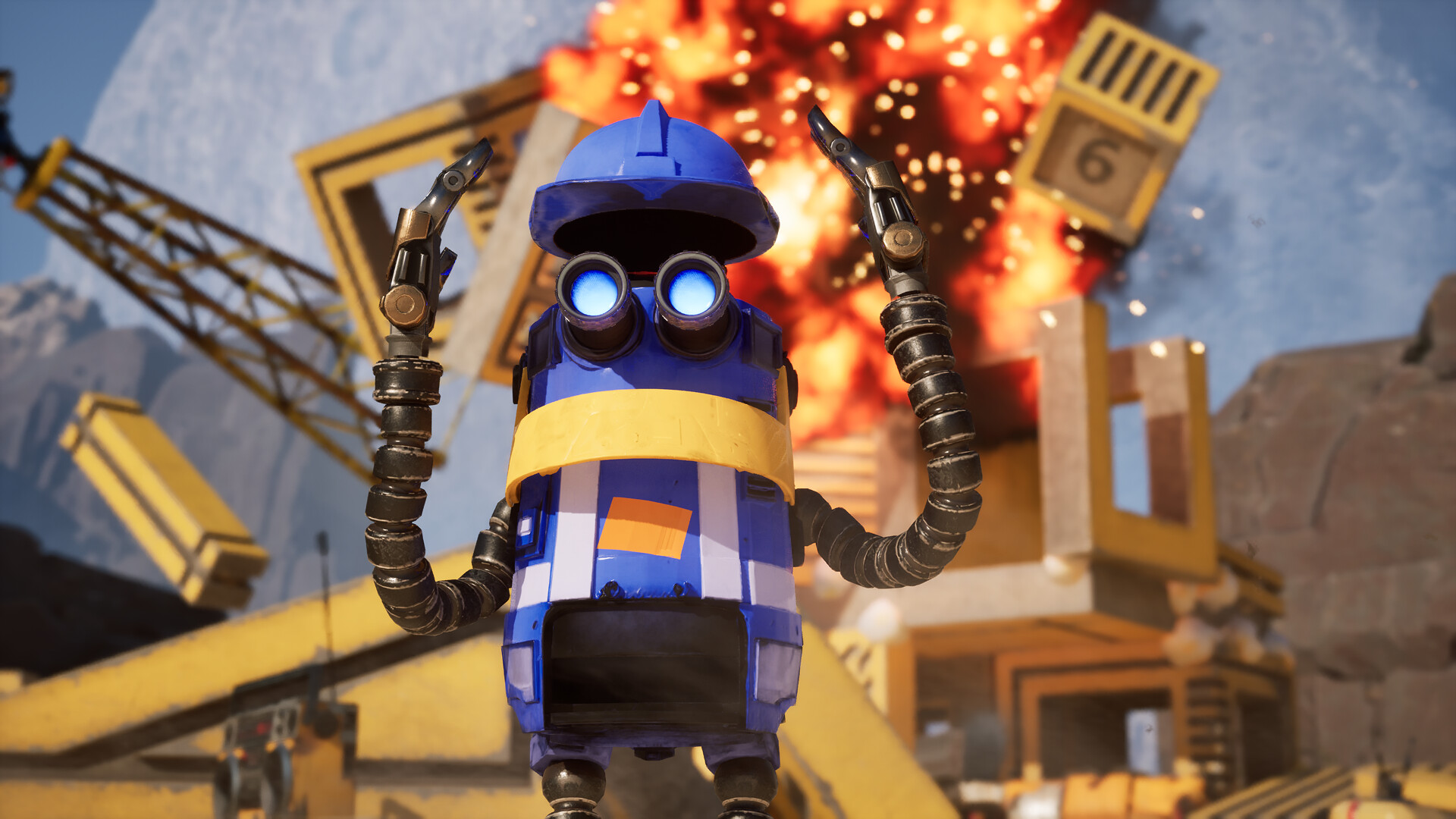
Salvation Denied is a chaotic co-op building sim for one to four players launching in Fall 2026 on PC via Steam, with PS5 and Xbox Series X versions following in 2027. Published by Digital Vortex Entertainment and developed by indie studio Firevolt, the game puts players in control of a crew of small, yellow, mischievous construction robots tasked with assembling massive structures on a hostile planet, where physics governs every block and disaster can strike at any moment. A limited open playtest is currently live on Steam.
The building system is fully physics-driven, meaning every block carries real weight and affects the stability of whatever sits above, below, and beside it. One overloaded support or a rushed placement can send an entire tower cascading down like dominoes. Players scramble across their own unstable constructions, hurling building parts into position, throwing up temporary supports, and trying to rescue the whole thing when it starts to lean. To manage the chaos they carry a set of construction gadgets: a Gravity Gun for moving materials, a Foam Gun for stabilizing sections, and Jetpacks for repositioning when the ground beneath them stops being ground. Larger machines raise the stakes further. The Gravity Tank can shift entire sections of a build, while Fatboy, a bulldozer-shredder hybrid, and a construction 3D printer recycle unwanted parts into useful ones, though they occasionally tear the structure apart by accident. The tools are powerful enough to save a build or destroy it, and the line between the two is thinner than you'd expect.
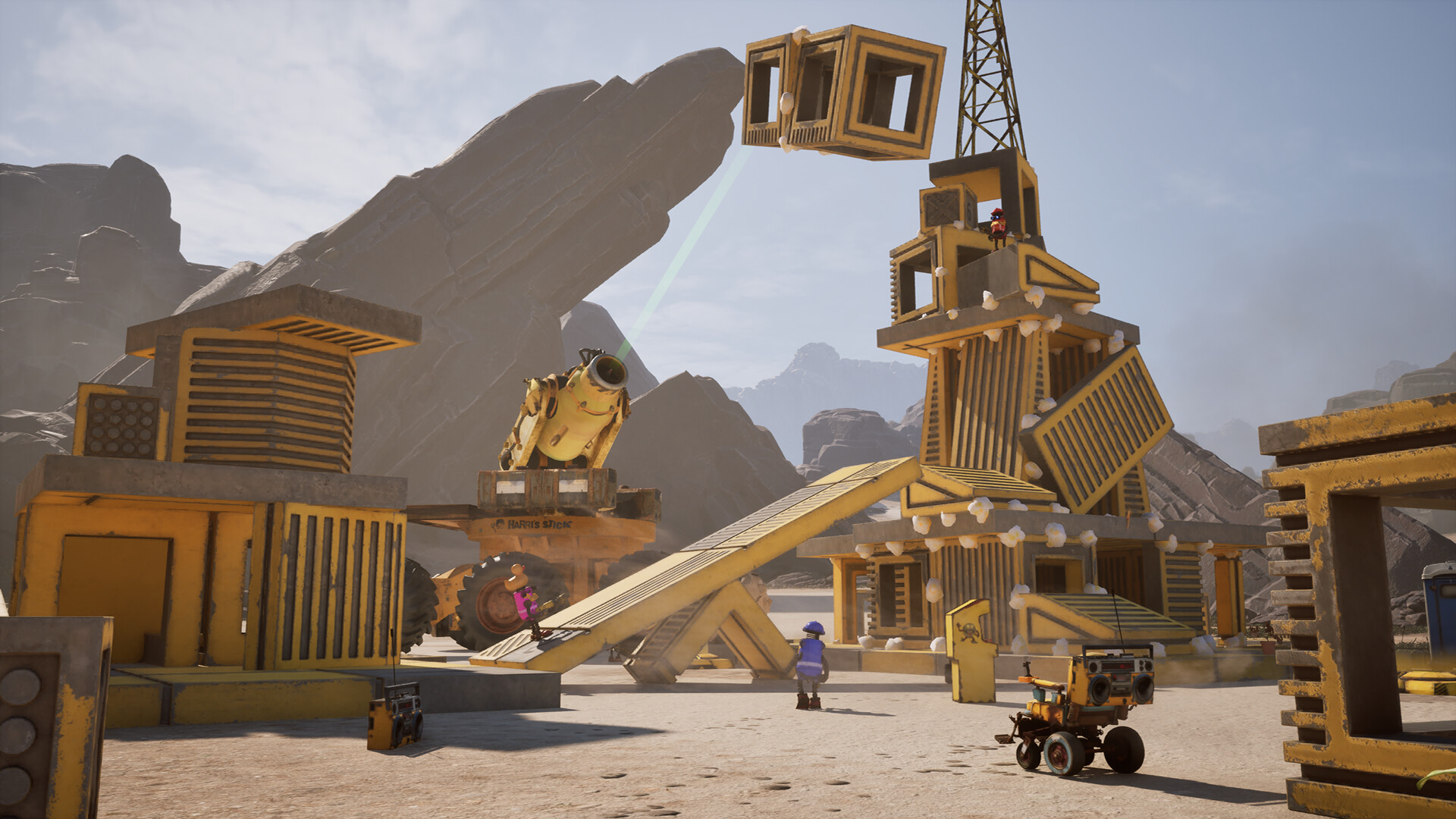
The robots work under contract for a mysterious, fanatical client who seems to be the only one who knows what's coming next. On a planet filled with extreme environments, the crew assembles massive experimental structures to specifications they don't fully understand, following orders from an employer whose obsession drives the entire operation forward. The robots themselves are mischievous by nature, which means coordination between players is less a matter of clean execution and more a matter of barely contained pandemonium.
That pandemonium is where the game finds its rhythm. Cooperative play supports proximity voice chat, so players hear each other based on distance. Someone shouting instructions from the top of a wobbling tower sounds exactly as far away as they are, turning every near-collapse into a moment of genuine comedy or genuine panic depending on which side of the structure you're standing on. Creative Director Ajven Pabiarzhyn has described the intent plainly: "The best moments happen when the structure starts to wobble and nobody knows if it's about to collapse or somehow survive."
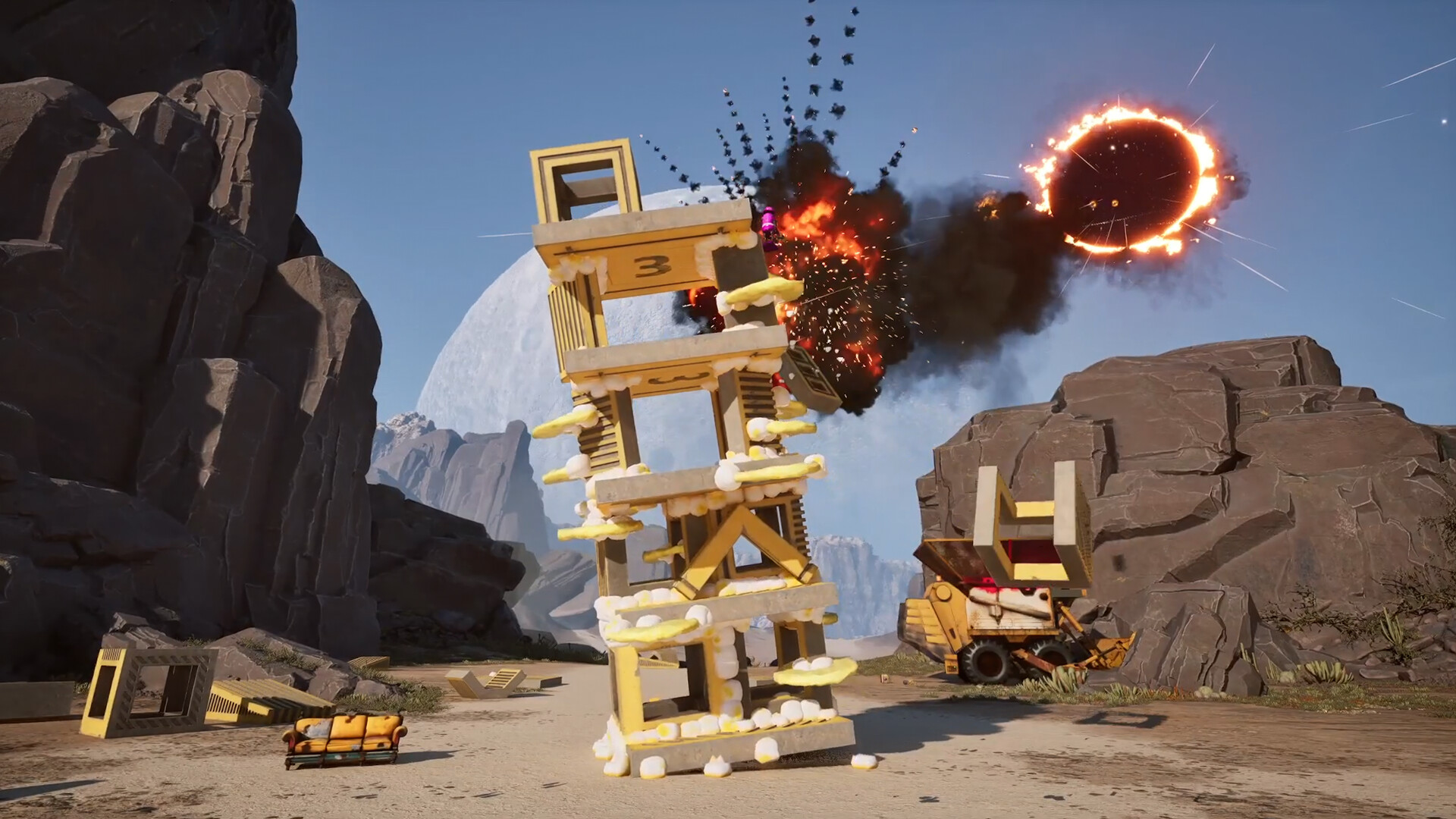
Environmental hazards make sure those moments arrive often. Meteor showers, acid rain, and other sudden disasters act as stress tests for every construction, forcing players to reinforce weak spots on the fly, catch falling debris, and improvise solutions in real time. These aren't scripted events that pause the action. They land while you're still building, still arguing about where the next support goes, still watching a teammate accidentally drive Fatboy through a load-bearing wall. Additional challenge modes layer on harsher constraints, including random block shapes, material limits, and time pressure that demand quick adaptation from the whole team.
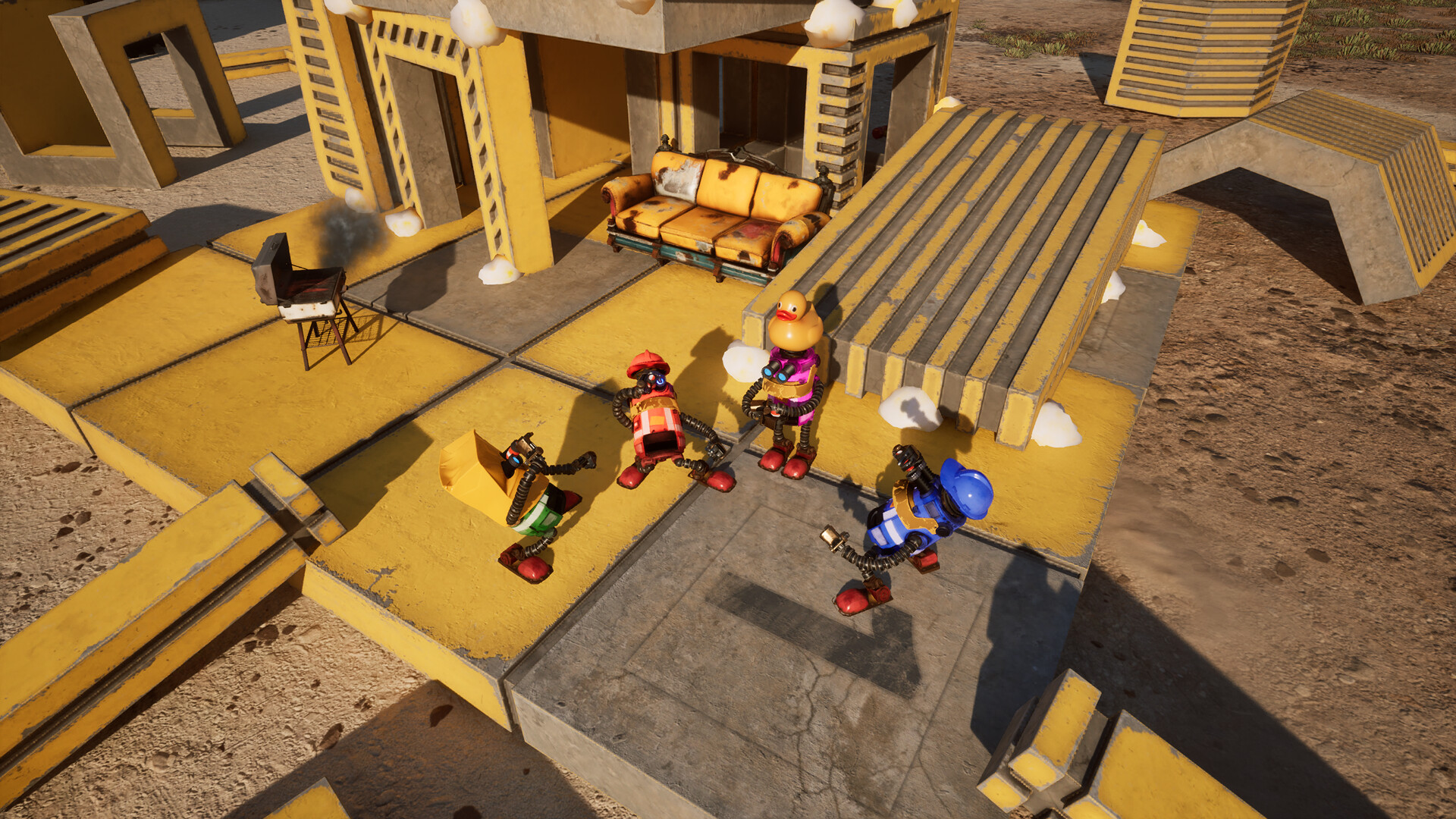
Salvation Denied is built around the tension between ambition and gravity. Players construct something enormous, watch it teeter, and either pull off a last-second save or witness a spectacular collapse that sends four small yellow robots tumbling through the wreckage.