

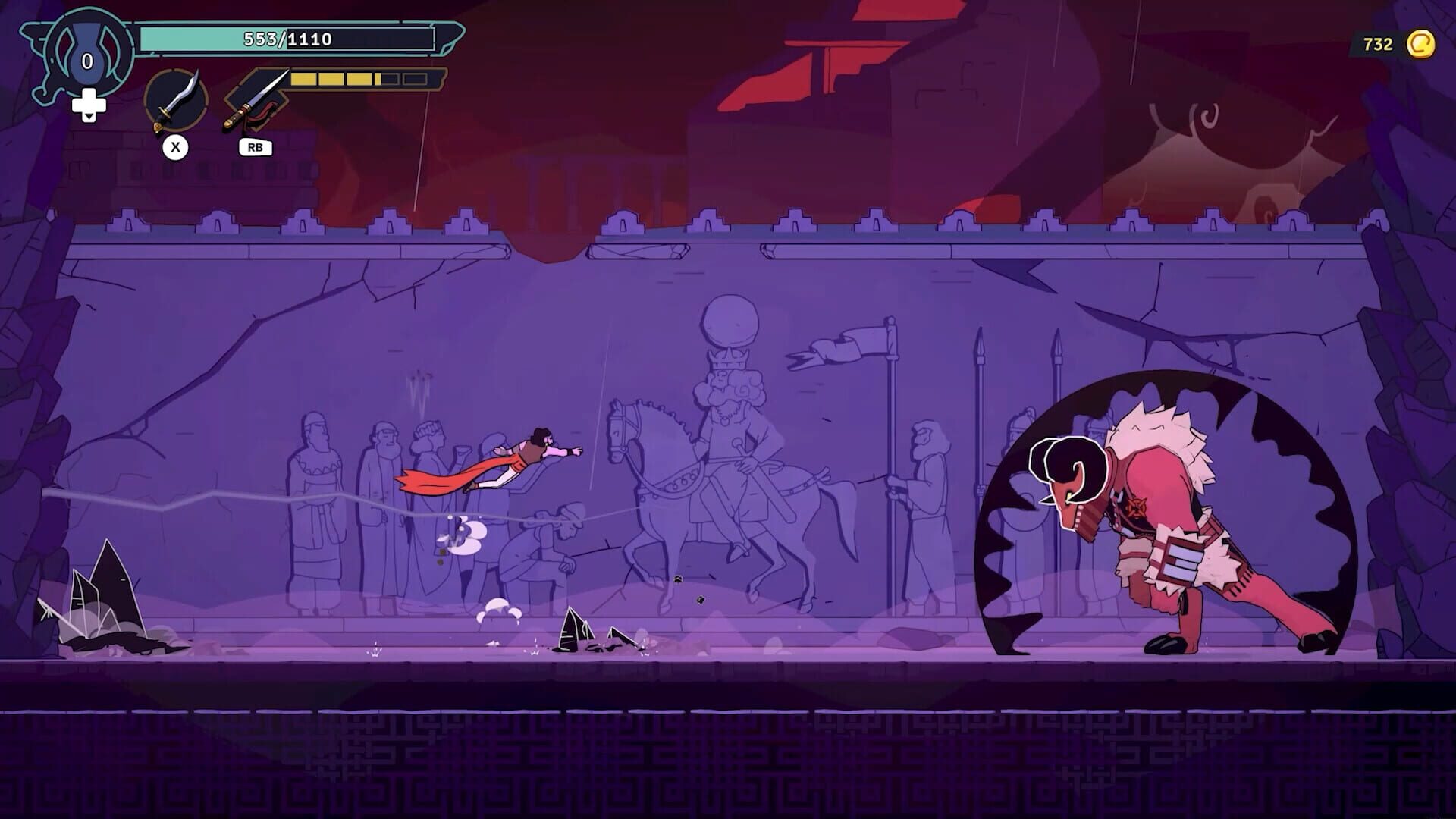
The Rogue Prince of Persia is a 2D action platformer developed by Evil Empire in collaboration with Ubisoft, coming to Nintendo Switch with a physical release. The game takes the Prince of Persia franchise into roguelite territory, built around acrobatic combat, parkour movement, and procedurally generated levels that shift with every attempt.
Combat here is fast and fluid, built on wall running, dodge chains, and acrobatic combos that reward precision and momentum. The Prince's agility is his primary tool, turning every surface into a launchpad and every trap into something to exploit rather than avoid. Over 100 unique weapons and medallions can be discovered and unlocked across runs, each one feeding into a build system that lets players craft their own approach to fights. Weapons can be adapted and upgraded, stacking into combinations that define how each run plays out. The game wants players to find their own style through repetition and experimentation, not follow a prescribed path through its encounters. The loop of dying, learning, and reshaping your loadout is the engine driving everything forward.
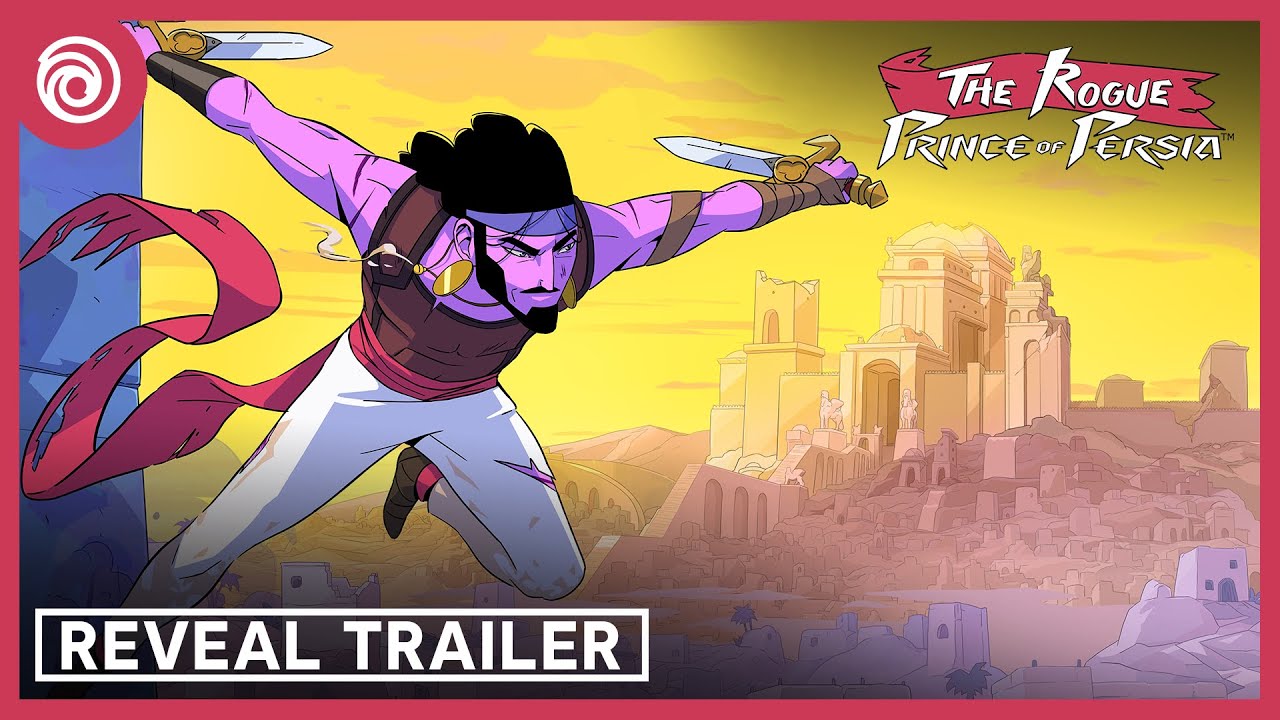
Click to load trailer from YouTube
By clicking, you agree to YouTube's privacy policy. Data will be shared with Google.
The story frames all of this through a Prince whose fatal mistake doomed his kingdom. Spared by death itself, he's caught in a cycle where each failure becomes another chance to explore different paths, meet new characters, and use knowledge from past attempts to change his people's fate. It's a premise that gives the roguelite structure narrative weight, tying the repetition of runs to the Prince's own desperation to prove himself and save Persia.
Procedurally generated levels ensure no two runs play out the same way, while random events, difficulty modifiers, and evolving narration layer on top of that foundation. Metaprogression carries forward between attempts, giving each death a sense of forward motion even when a run ends badly.
The Prince isn't just fighting enemies; he's fighting against the weight of his own mistakes, trying to rewrite a fate he set in motion. The tension between guilt and determination gives the cycle of death and retry something to hold onto beyond the mechanical satisfaction of a good run.
The mood matches the intensity. An intense soundtrack pulses underneath the action, keeping the rhythm tight even as the procedural generation keeps the scenery unpredictable. Every run is designed to leave players wanting one more attempt, one more chance to push further with a new combination of weapons and knowledge carried over from the last failure. The Rogue Prince of Persia builds its identity around that pull, the feeling that the next run might be the one where everything clicks into place.