

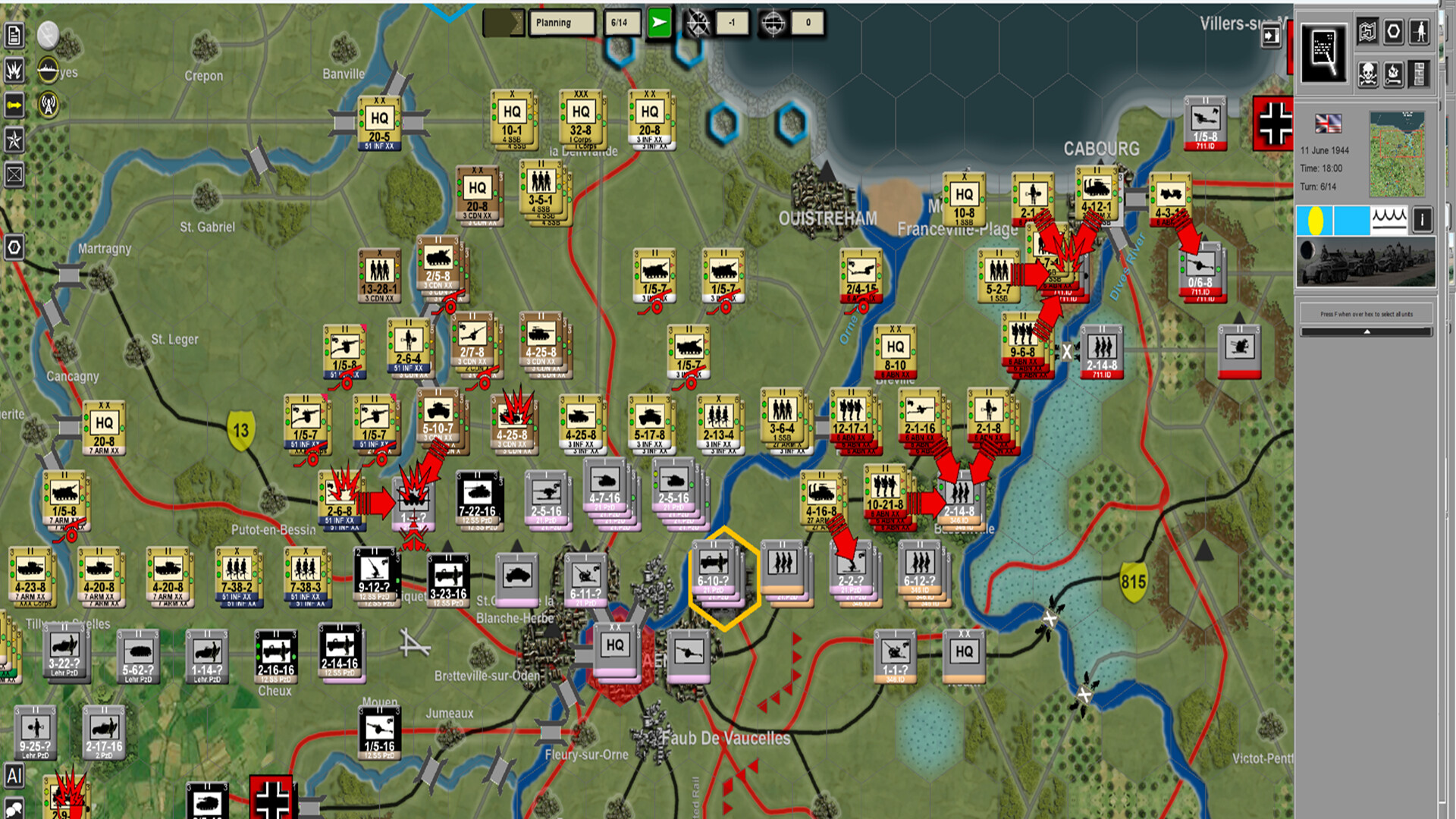
WEGO World War II: Overlord is an operational-level hex-based wargame that recreates the Allied invasion of Western Europe across the fields, hedgerows and beaches of Normandy. This ground-centric strategy game from developer Brian Kelly and publisher Matrix Games trades the conventional turn structure of most wargames for something more demanding. Both sides plan simultaneously, then watch their orders play out in parallel — a system where anticipation matters more than reaction.
Most board and computer wargames follow what's known as IGOUGO, where one side moves and resolves combat before the other repeats the process. WEGO World War II operates differently. Both players issue orders under the same fog of war, unable to see the position or strength of enemy units, then those orders execute at the same time. This simultaneous resolution means every decision must account not just for what the enemy is doing now but what they might do next. The game frames itself around the player's ability to plan for and manage chaos, finding solutions to perceived challenges with the tools available. Thinking three moves ahead isn't optional guidance here — it's the core demand.
The game includes fourteen historical scenarios that span the full breadth of the Normandy campaign, ranging from focused engagements like the landing at Omaha Beach to a massive 135-turn campaign covering the entire operation. Standalone scenarios and interconnected campaigns feature iconic battles across Normandy's hedgerows, the breakout towards Brittany, and the struggle for key cities like Caen and Cherbourg. Stylized maps of Normandy sit beneath a hexagonal grid that regulates unit placement, movement and combat. Ground units range in size from company to regiment and brigade level, represented on the map using counters with stylized or NATO icons. Players can engage through hotseat, against the AI, or via play-by-email multiplayer.
Beyond the ground forces that form the backbone of each scenario, air assets represent Allied and German air groups capable of conducting counter-air operations, interdiction, air resupply, bombardment and ground support missions. Air reconnaissance can collect critical information about enemy locations, unit types and strengths, piercing through the fog of war that otherwise governs every engagement. Weather is modeled and can significantly influence air operations, supply efficiency and airborne missions, adding another layer of uncertainty to planning.
Naval assets represent the powerful Allied naval forces that supported the landings and subsequent operations, conducting naval gunfire bombardment, providing logistical support and facilitating amphibious landings across multiple beaches. Airborne and glider forces allow players to execute operations behind enemy lines: seizing key terrain, disrupting supply lines, blocking enemy reinforcements. Ground assets provide additional capabilities including electronic warfare, command activities and specialized logistic actions. Logistics assets deliver essential resources that enhance movement, combat effectiveness or replacement priority for player-selected units and formations. Securing supply lines and managing logistical constraints is critical to sustaining momentum during the invasion.
What holds all of these systems together is the WEGO structure itself. Every layer of complexity, from naval bombardment to airborne drops to electronic warfare, feeds into a single planning phase where both sides commit their orders blind. The fog of war isn't a cosmetic feature layered on top of familiar mechanics. It's the foundation that makes each of those fourteen scenarios play out differently every time, demanding that players solve problems under pressure with incomplete information and no second chances once the turn resolves.