

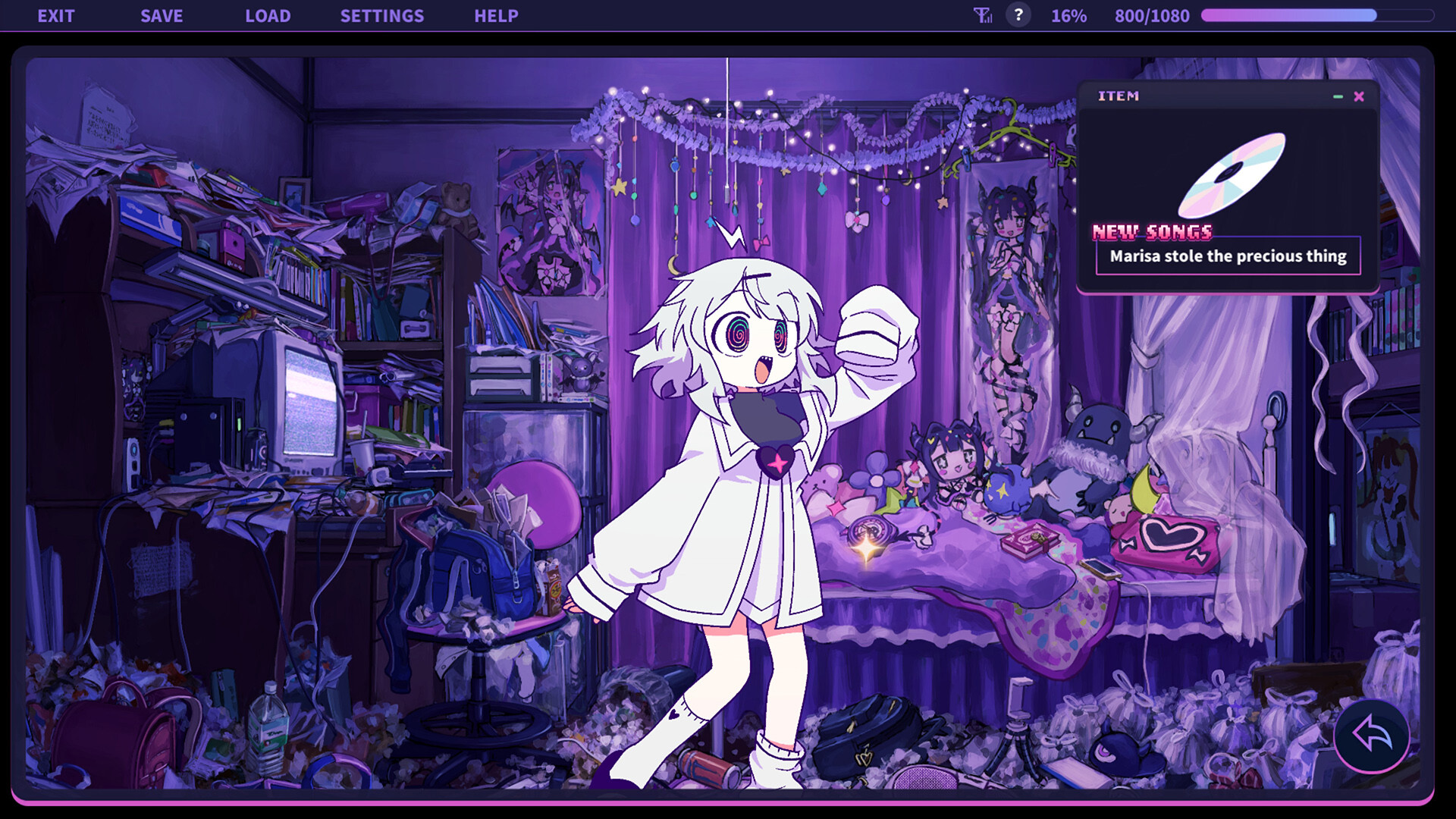
Yunyun Syndrome!? Rhythm Psychosis is a rhythm adventure game about a hikikomori girl who has overdosed on denpa songs and lost her grip on reality. Players take on the role of Qtie, a shut-in who suffered so much in the real world that she's become a little (very) fuzzy in the head. Her obsessive love for a fictional character named Yunyun has curdled into something the game treats as a genuine illness, and her solution to this condition is not recovery but propagation. Armed with headphones and anonymous social media accounts, Qtie sets out to infect the entire internet with her Yunyun brain rot.
The premise hinges on a specific loop. Qtie gets high on denpa songs, those intentionally strange and catchy tracks that define the game's musical identity, then channels that euphoria into anonymous online posts designed to spread her heartful psychosis to everyone else. The goal is nothing less than world destruction through sheer degenerate otaku energy. The game poses its own questions openly: why did she become a hikikomori, how does anonymous posting lead to the end of the world, and does a happy ending even exist for someone this far gone? It promises the answers lie at the convergence of insanity and denpa psychosis.
Denpa songs form the entire playable soundtrack, with over 30 tracks available. For the uninitiated, denpa is a genre of music built around being deliberately weird and aggressively catchy. The rhythm gameplay feeds directly into the narrative, with Qtie's overly high state from these songs driving her compulsion to spread Yunyun love across the internet.
Two characters anchor the story. Qtie is the main character, a hikikomori whose retreat from reality has funneled all her emotional energy into devotion for a fictional being. Yunyun is that fictional character, described as a very much angelic devil who speaks to Qtie through her monitor screen. Whether Yunyun actually exists or is simply a figment of Qtie's imagination remains uncertain, though the game leans heavily toward the latter. Their relationship plays out across multiple endings, suggesting the story branches depending on how deep into the psychosis players are willing to go.
The tone is deliberately unhinged, wrapping genuine questions about isolation and obsession inside layers of internet slang and otaku culture. Brain rot is not a side effect here but the central mechanic: the thing you are actively trying to spread. The game frames Qtie's condition with a mix of affection and alarm, treating her as both sympathetic and deeply unwell. There is a Doki-Doki experience promised alongside those multiple endings, nodding to the emotional intensity the story aims to deliver beneath its manic surface.
Yunyun Syndrome!? Rhythm Psychosis is not yet available to play, still in development ahead of its planned release. For a game that asks players to put on headphones and willingly become ill, it commits fully to the bit. Qtie's story begins where most stories end: past the point of no return, posting anonymously into the void, convinced that enough denpa songs and enough Yunyun love can bring the whole world down with her.